

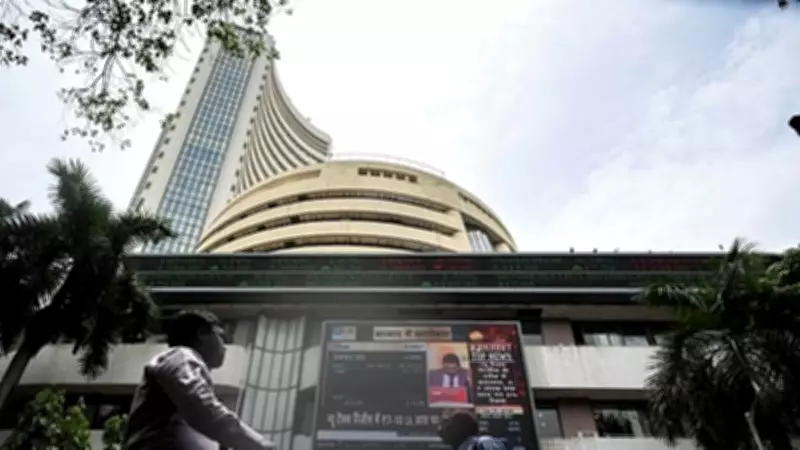
The Indian equity markets witnessed a significant upswing on Tuesday, registering a robust 2.5% gain as investor sentiment received a substantial boost from the announcement of a comprehensive trade agreement between India and the United States. This development comes as a welcome relief following recent market volatility and represents the largest single-day rise in nearly nine months.
Market Performance and Key Indices
The benchmark indices displayed remarkable strength throughout the trading session. The Sensex, which opened with an impressive 4.5% gap-up, eventually settled at 83,739.13 points, marking a gain of 2.54%. Similarly, the Nifty 50 index closed at 25,727.55 points, registering a 2.55% increase from Monday's closing levels. This surge effectively erased the steep decline witnessed on Sunday, which had been triggered by Budget announcements regarding an increase in Securities Transaction Tax (STT) for futures and options trading.
Broad-Based Rally Across Sectors
The market rally exhibited a comprehensive nature, with approximately three-fourths of all stocks trading on the Bombay Stock Exchange (BSE) ending in positive territory. All sectoral indices closed higher, indicating widespread investor optimism across various segments of the economy.

Before the Indian markets commenced trading, American Depository Receipts (ADRs) of Indian companies listed on US exchanges had already surged significantly. This pre-market movement reflected the positive investor response to the late Monday announcement of the trade agreement between the two economic powerhouses.
Trade Deal Details and Market Impact
The newly announced trade agreement includes a substantial reduction in tariffs on Indian exports to the United States, with rates being lowered to 18% from the previous 50%. This tariff reduction represents a significant breakthrough in bilateral trade relations and has been particularly welcomed by export-oriented sectors.
Nilesh Shah, Managing Director of Kotak Mahindra Asset Management and a part-time member of the Economic Advisory Council to the Prime Minister, commented on the development, stating, "When countries are on good terms there is better flow of capital. The announcement of the deal will clear the imaginary constraints and it should lead to increased capital flow into the markets, which in turn will not only lift the markets but also strengthen the rupee."
Export Sectors Lead the Charge
Textile companies emerged as some of the biggest beneficiaries of the trade deal announcement. Stocks such as Gokaldas Exports and Welspun Living hit the 20% upper circuit limit, reflecting investor enthusiasm for companies that derive substantial revenue from US markets.
The seafood and aquaculture sector also witnessed significant gains, with companies like Avanti Feeds and Apex Frozen Foods reaching the 20% upper band. This sector depends on the US market for approximately 50-70% of its total revenues, making it particularly sensitive to trade policy developments between the two nations.
Other export-driven sectors that experienced sharp rallies included:
- Chemicals and specialty materials
- Gems and jewelry manufacturing
- Automobile components and equipment
- Other original equipment manufacturers (OEMs)
Currency Market Response
The positive sentiment extended beyond equity markets to the currency segment. The Indian rupee staged a remarkable recovery against the US dollar, gaining more than 1% to close at 90.27 per dollar. This represents the currency's most significant single-day appreciation in over half a decade.
This currency strength comes as a relief after months of pressure that saw the rupee repeatedly tumble to fresh all-time lows. The currency had been facing headwinds from net outflows of nearly $12 billion from India's equity markets during the period from August 2025 to January 2026.

Analyst Perspectives and Future Outlook
Analysts at Motilal Oswal Financial Services expressed optimism in their market note, stating, "With this deal announcement, we believe that the market will now begin to accord correct weightage to the improving trajectory of corporate earnings growth, which has shown successive improvement over the quarters with an improving earnings revision trend." They further noted that Nifty valuations "remain palatable" and could potentially expand given the latest developments.
However, market experts have also advised caution as investors await the detailed fine-print of the trade agreement. Specific concerns have emerged regarding statements from US President Donald Trump indicating that India would halt Russian oil purchases and commit to buying $500 billion worth of US goods, along with moves toward eliminating tariff and non-tariff barriers completely.
Trade Context and Bilateral Relations
India's imports from the United States amounted to $46 billion during the 2024-25 fiscal year, while the country's total global imports stood at $721 billion in the last fiscal year. The trade agreement announcement marks a significant milestone in bilateral relations that had been strained by various trade disputes and negotiations.
Radhika Rao, Senior Economist at DBS Bank, provided insights into the expected implementation of the agreement, noting, "While the US administration has called for a sharp cut in the tariff (nil on imports from the US) and non-tariff barriers from India, we expect the finer details to point towards a phased adjustment, evident in the other bilateral trade agreements that have been recently concluded. Selected sensitive and strategic sectors might be visited separately."
The delay in finalizing the trade deal had weighed heavily on Indian equity markets, which had also lagged behind global peers due to India's relatively low exposure to the ongoing artificial intelligence-led investment boom. Additionally, weakening investor confidence amid global geoeconomic and geopolitical uncertainty had contributed to market underperformance.
As markets await the official press release detailing the agreement, investors remain cautiously optimistic about the potential for improved capital flows, strengthened bilateral trade relations, and sustained market momentum in the coming weeks and months.





