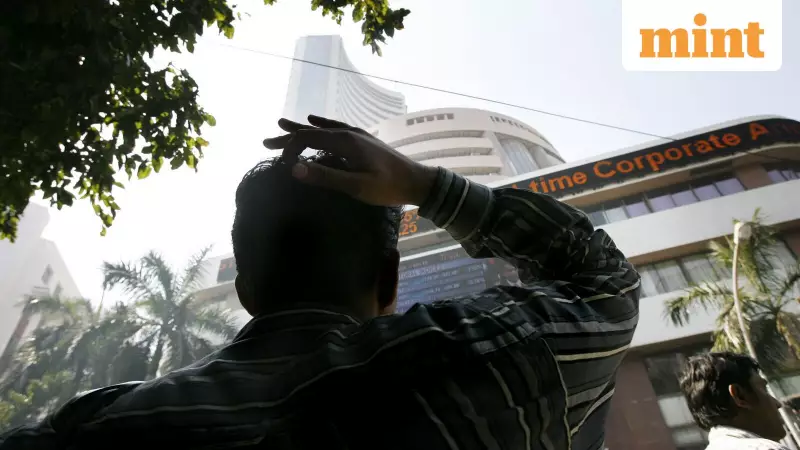
The Indian equity market concluded the first full week of 2026 on a deeply negative note, recording its most significant weekly decline since the middle of September. Investor sentiment took a severe hit from a combination of escalating global geopolitical risks and renewed trade warnings from the United States.
Market Plunge Driven by Global Headwinds
The benchmark indices, Nifty 50 and Sensex, plummeted by 2.45% and 2.55% respectively over the week. This sharp correction was primarily triggered by heightened risk aversion among investors. The key external factors included fresh tariff warnings from former US President Donald Trump targeting Indian imports and the broader geopolitical tensions, including the Venezuela-US standoff.
Adding sustained pressure was the continued selling activity by Foreign Portfolio Investors (FPIs). Data shows that FPIs withdrew a substantial ₹11,800 crore in the first seven trading sessions of 2026. Furthermore, market participants turned cautious ahead of the December quarter corporate earnings season, which kept the overall mood fragile.

Analysts Decode the Sell-Off and Near-Term Risks
Ponmudi R, CEO of Enrich Money, stated that the market downturn reflected the heightened risk aversion triggered by the US tariff threats and geopolitical concerns. He pointed out that the proposed US tariffs, largely linked to nations purchasing Russian oil, remain a critical near-term overhang for Indian markets.
He explained that since late 2025, benchmark indices have experienced intermittent corrective phases of 5–8%. During these phases, export-oriented sectors like Information Technology (IT), pharmaceuticals, and select midcap stocks have faced the maximum pressure. However, he noted that foreign institutional investor outflows have been moderate and orderly, indicating controlled risk reduction rather than panic selling.
Estimates suggest the potential tariff impact on India's GDP for FY26 could range between 0.5% and 0.7%, depending on the final implementation scope and any Indian countermeasures. Ponmudi added that strong domestic consumption, resilient services exports, and trade diversification towards the EU, ASEAN, and the Middle East offer a partial cushion.
Vinod Nair, Head of Research at Geojit Investments, highlighted that the week began cautiously due to expectations of higher government borrowing, which pushed bond yields up. Although strong GST collections and healthy bank credit growth provided some support, global headwinds ultimately weakened sentiment. He listed concerns over Russian oil imports, China's restrictions on rare earth exports, and the persistent FII outflows as major dampeners.
Q3 Earnings and Macro Data to Guide Markets Ahead
Market focus is now squarely on the ongoing third-quarter earnings season. Ponmudi emphasized that heavyweight IT companies are set to take center stage. HCL Tech, TCS, Infosys, Tech Mahindra, and Wipro, which together account for nearly 13% of the Nifty's weight, are scheduled to report their results. Their performance and management commentary will be critical for broader market direction.
Investors will scrutinize management guidance on client IT budgets for the year, signs of recovery in discretionary spending, and hiring plans, especially in light of tighter H-1B visa approvals. Updates on progress in AI-led technologies will also be a key area of focus.
Earnings from Reliance Industries Ltd will be another major trigger, given its significant weight in the indices. Trends in its energy, retail, and telecom businesses, along with guidance on demand, margins, and capital expenditure, will drive sentiment.
On the macroeconomic front, key data releases will shape global risk appetite. India's December CPI and WPI inflation figures, along with US core CPI, retail sales, and home sales data, will influence expectations about monetary policy easing by major central banks.

Vinod Nair expects market volatility to persist in the near term, especially for US-exposed companies and sectors like metals and oil & gas. He concluded that while strong domestic fundamentals, resilient GDP growth, and robust credit trends could support selective buying, FPI flows and currency movements will be key monitorables. Any positive development in India-US trade discussions could spark a short-term rebound.