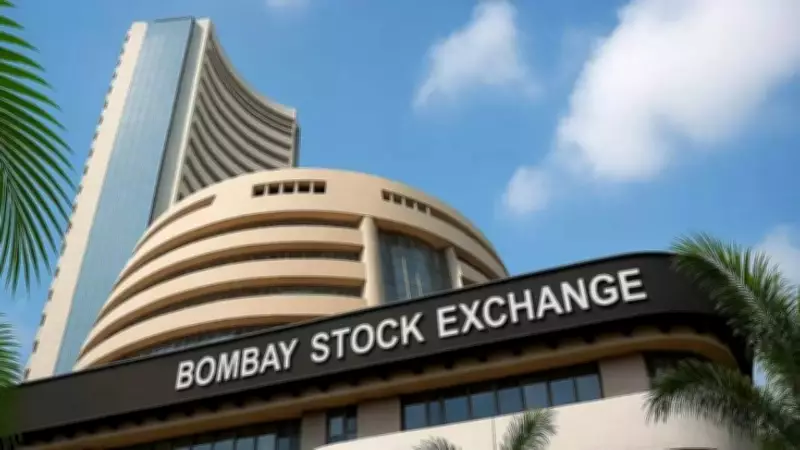
Middle East Conflict Triggers $240 Billion Market Crash in India
India's financial markets have experienced a severe downturn following escalating geopolitical tensions in the Middle East, with investor wealth plummeting by approximately $240 billion within a single week. According to comprehensive data from both the Bombay Stock Exchange and the National Stock Exchange of India, this dramatic sell-off reflects how international conflicts can rapidly destabilize global financial systems, particularly affecting economies like India that maintain deep connections to worldwide trade networks, energy supply chains, and foreign investment flows.
Reserve Bank Governor's Warning Proves Prescient
Shaktikanta Das, Governor of the Reserve Bank of India, had previously highlighted the substantial risks that global geopolitical tensions pose to financial stability. During the 2024 Monetary Policy Committee press conference at RBI headquarters in Mumbai, Das emphasized that "heightened geopolitical tensions and global financial market volatility remain key risks to the economic outlook." The sudden erosion of market capitalization has sent shockwaves across Dalal Street, with benchmark indices falling sharply and investors urgently reassessing their risk exposure.
Oil Price Surge Creates Macroeconomic Pressure
At the core of the market turbulence lies the escalating conflict in West Asia, which has triggered a significant surge in global oil prices beyond $100 per barrel. This development raises serious concerns about inflation, energy security, and trade deficits for oil-importing nations like India. Dr Indranil Pan, Chief Economist at Yes Bank, had cautioned in the bank's 2023 Macro Economic Outlook presentation that "a sustained rise in crude oil prices can widen India's current account deficit and also create inflationary pressures for the economy."

As the world's third-largest importer of crude oil, India faces direct economic consequences from any sharp increase in energy prices. Higher oil costs elevate transportation and manufacturing expenses, ultimately pushing up consumer prices and potentially weakening economic growth prospects. The situation has been exacerbated by fears of disruption in the Strait of Hormuz, a critical shipping route through which a substantial portion of global oil supply passes.
Foreign Investors Withdraw Billions from Indian Markets
Another significant driver of the market downturn has been the large-scale withdrawal of foreign investment from Indian equities. Foreign portfolio investors have pulled billions of dollars out of the market in recent weeks as global uncertainty intensifies. During just the first half of March, foreign investors withdrew approximately ₹52,704 crore (equivalent to $5.7 billion) from Indian stocks.
Andrew Holland, Chief Executive Officer of Avendus Capital Public Markets Alternate Strategies, explained during a 2023 global markets webcast that "periods of heightened geopolitical risk typically push investors toward safer assets and developed markets, which can lead to capital outflows from emerging economies." Such capital outflows can amplify market volatility because foreign institutional investors maintain substantial positions in Indian equities.
Widespread Sectoral Losses and Market Impact
The market downturn has not been confined to any single sector but instead reflects broad-based risk aversion among investors. Financial stocks, which typically dominate Indian indices, have been among the worst affected. Banking shares and financial institutions have fallen sharply as investors worry about potential impacts from slower economic growth.
Automobile companies have also suffered steep losses, with the sector recording one of its worst weekly performances in recent years. Rising fuel costs and economic uncertainty could reduce consumer spending on significant purchases such as vehicles. Infrastructure and aviation stocks have similarly come under pressure as investors anticipate higher operating costs linked to rising energy prices.

Domestic Investors Attempt to Stabilize Markets
Despite the substantial sell-off by foreign investors, domestic institutional investors including mutual funds and insurance companies have continued purchasing stocks in efforts to stabilize the market. However, analysts suggest that domestic buying alone may prove insufficient to offset heavy foreign outflows if geopolitical tensions persist. Retail investors, who played a major role in India's market rally in recent years, are adopting a cautious wait-and-watch approach amid the current volatility.
Expert Advice for Navigating Market Uncertainty
Market regulators and financial experts have urged investors to avoid panic during this phase of uncertainty. Historically, geopolitical crises often trigger temporary market corrections rather than long-term structural declines. Analysts indicate that markets typically stabilize once geopolitical situations become clearer.
Nilesh Shah, Managing Director of Kotak Mahindra Asset Management Company, had warned during the 2023 Kotak Mutual Fund Annual Investor Conference that "markets dislike uncertainty, and geopolitical developments can cause sharp shifts in capital flows as investors reassess risks." Investors are being advised to focus on long-term fundamentals rather than short-term volatility.
The future direction of Indian markets will largely depend on developments in the Middle East conflict and global energy prices. If tensions ease and oil prices stabilize, markets could recover relatively quickly. However, prolonged conflict could lead to sustained volatility, especially if energy supply routes become disrupted or inflation rises sharply.
Kristalina Georgieva, Managing Director of the International Monetary Fund, emphasized during her 2023 opening remarks at the IMF-World Bank Annual Meetings that "geoeconomic fragmentation and geopolitical tensions are creating new uncertainties for the global economy." The $240 billion erosion in market wealth serves as a stark reminder of the interconnected nature of the global economy, where conflicts thousands of kilometers away can rapidly shake financial markets in one of the world's fastest-growing economies.