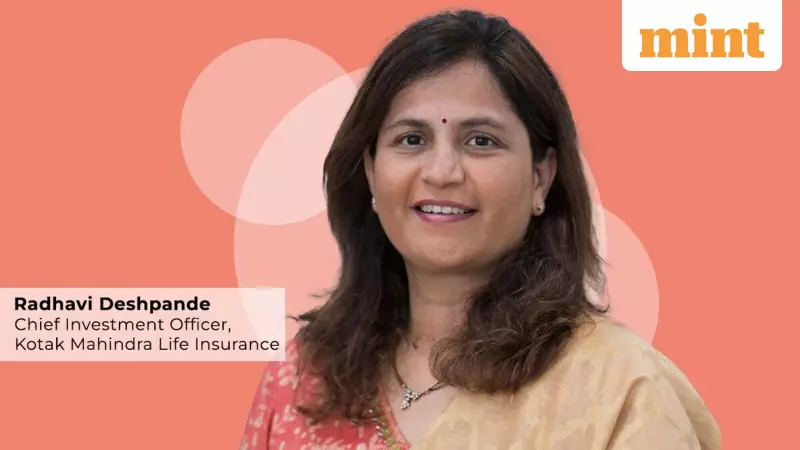
Radhavi Deshpande, the Chief Investment Officer at Kotak Mahindra Life Insurance, has expressed a constructive view on the Indian equity market. In a recent interview, she pointed to stabilising corporate earnings estimates and consistent domestic liquidity as key pillars supporting a positive outlook. Deshpande also anticipates a revival in the smaller segments of the market.
Earnings Recovery and Key Market Triggers for 2026
Deshpande believes the market is set for a turnaround after two years of subdued earnings growth, which reflected softer nominal expansion. She stated that with supportive fiscal and monetary policies in place, and market valuations aligning with long-term averages, future returns should closely follow an improvement in corporate profitability.
The primary catalysts for the market in 2026, according to her, will be ongoing ease-of-doing-business reforms. These include efforts to lower compliance costs and streamline approval processes. Furthermore, progress on significant trade agreements with major partners like the United States, the European Union, and Australia will be crucial.

The foundation for better earnings is already visible. Strong macroeconomic indicators and encouraging consumption trends are providing support. India's GDP growth remains robust, aided by fiscal stimulus, tax benefits, and an accommodative monetary policy stance from the Reserve Bank of India (RBI).
Sectoral recoveries in financials, industrials, and automobiles, coupled with margin expansion from cost-optimisation initiatives, add to the confidence. Consumption data is particularly strong, with passenger vehicle sales surging over 25% year-on-year. Two-wheelers and tractors posted double-digit growth, while commercial vehicle volumes rose sharply, signalling strength in rural demand and infrastructure activity.
The Road Ahead for Mid-Cap and Small-Cap Stocks
While mid-cap stocks have largely kept pace with their large-cap counterparts, small caps have lagged. Deshpande attributes this underperformance to two factors: slower nominal growth and the disproportionate impact of U.S. sanctions on smaller companies, which led to weaker earnings growth.
However, she expects this trend to reverse. As both headwinds ease, earnings momentum in small-caps should pick up, paving the way for renewed investor interest and better performance in both the mid and small-cap segments. She noted that valuations for many mid-cap companies are now reasonable, offering decent return potential over a 2-5 year horizon.
Decoding GDP Softness, IT Sector Value, and RBI's Path
Addressing the softness in nominal GDP despite strong real GDP growth, Deshpande explained it primarily reflects lower inflation, driven by easing food prices and market dynamics related to China. She views this as a temporary price effect rather than a growth concern, with nominal recovery likely in coming quarters.
On the beleaguered IT sector, she sees value emerging after four years of underperformance. The shift in global tech spending toward Artificial Intelligence (AI) presents a significant opportunity for Indian IT firms in implementing AI-driven applications and using AI for cost optimisation. Investors should focus on companies actively building AI capabilities.
Regarding monetary policy, Deshpande highlighted the RBI's recent 25 basis points repo rate cut to 5.25% in December. She noted the central bank maintains a neutral stance, keeping its options open. If inflation remains benign, there is room for another 25 bps cut in 2026. This stance, along with liquidity injection measures, should benefit borrowers with cheaper loans and boost rate-sensitive sectors in the market.
Expectations from the Upcoming Union Budget
With the Union Budget scheduled for February, Deshpande expects the government to stay committed to fiscal prudence. A fiscal deficit in the range of 4.2–4.3% of GDP would comfort the bond markets. She also pointed out that the debt-to-GDP ratio may become a more preferred metric for assessing fiscal stability.

Key areas to watch will be tax buoyancy versus nominal GDP growth, as the government balances revenues with potential GST rationalisation. On the expenditure front, capital outlay is expected to remain robust, likely holding at around ₹10 lakh crore, with continued support for infrastructure, renewables, and defence.