

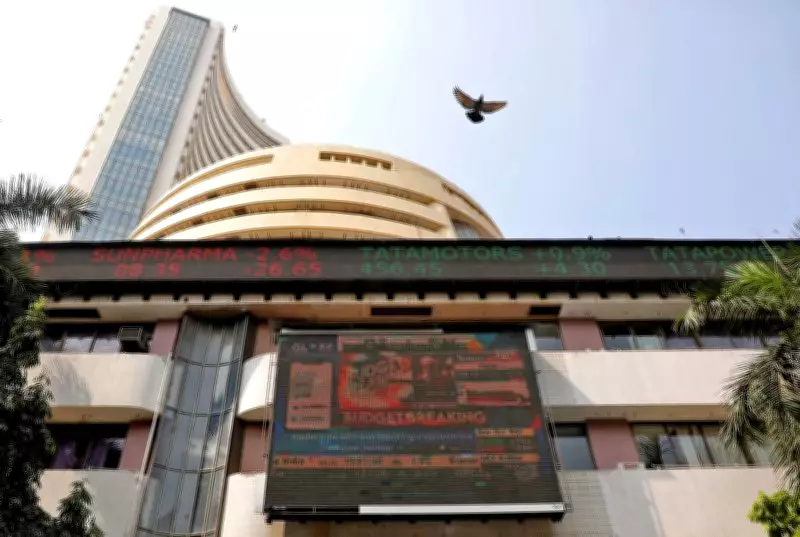
Stock Markets Witness Sharp Decline in Early Trading Session
Indian stock markets opened on a negative note and tumbled significantly during the early trading hours on Monday. The benchmark indices, including the Sensex and Nifty, registered substantial losses as investor sentiment turned bearish amid growing geopolitical uncertainties and capital flight from foreign investors.
Geopolitical Tensions in the Middle East Weigh on Market Sentiment
The escalating conflict in the Middle East has emerged as a primary factor driving the market downturn. Heightened tensions in the region have sparked concerns over potential disruptions to global oil supplies and broader economic stability. This geopolitical unrest has led to increased risk aversion among investors, prompting a sell-off in equities across various sectors.
Market analysts note that the uncertainty surrounding the conflict is causing volatility, with fears that prolonged hostilities could impact international trade flows and inflationary pressures worldwide.

Foreign Portfolio Investors Continue to Withdraw Funds
Concurrently, foreign portfolio investors (FPIs) have been pulling out substantial amounts of capital from the Indian markets. The persistent outflows of foreign funds have exacerbated the downward pressure on stock prices, contributing to the early trade slump.
Data indicates that FPIs have been net sellers in recent sessions, offloading shares worth significant sums. This trend reflects broader global risk-off sentiment and a shift towards safer assets amid the turbulent geopolitical landscape.
Impact on Key Market Indices and Sectoral Performance
The Sensex plummeted by over 500 points in early trade, while the Nifty fell below a crucial psychological level. The decline was broad-based, with most sectoral indices trading in the red. Notably, sectors such as banking, energy, and information technology witnessed pronounced selling pressure.
Banking stocks were among the hardest hit, as concerns over economic slowdown and rising input costs weighed on financial shares. Energy stocks also declined due to fluctuating crude oil prices influenced by the Middle East situation.
Market Outlook and Investor Advisory
Financial experts advise caution in the current market environment, highlighting the need for investors to monitor geopolitical developments and foreign fund movements closely. While short-term volatility is expected to persist, long-term fundamentals of the Indian economy remain robust.
Investors are recommended to adopt a defensive strategy, focusing on quality stocks with strong balance sheets and avoiding speculative trades until clarity emerges on the geopolitical front and foreign investor behavior stabilizes.
The market's performance in the coming sessions will likely hinge on updates regarding the Middle East conflict and trends in foreign institutional investment flows.






