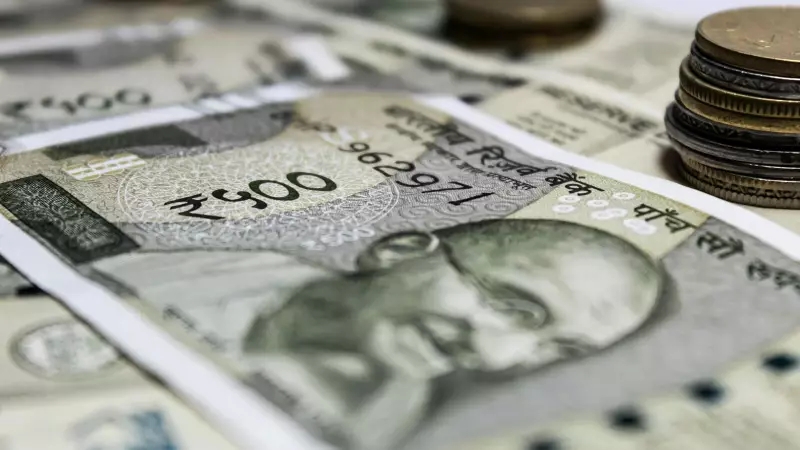
The Indian rupee tumbled to a historic low on Wednesday, December 3, 2025, decisively breaching the psychologically significant 90-mark against the US dollar for the first time ever. The currency's sharp decline is attributed to a combination of persistent foreign fund outflows and heightened uncertainty surrounding the long-pending trade agreement between India and the United States.
Record Fall and Market Dynamics
The domestic currency opened weak at 89.96 against the greenback and swiftly plummeted to a record intraday low of 90.16. By late morning, it was trading at 90.12. This milestone marks a depreciation of approximately 4.4% for the rupee in the current calendar year. Market experts point to a fragile sentiment driven by the lack of clarity on the Indo-US trade deal, which is discouraging foreign investment.
Compounding the pressure is the relentless selling by Foreign Portfolio Investors (FPIs) in the Indian equity markets. Data reveals that FPIs have sold a staggering Rs 1.48 lakh crore worth of shares so far in 2025. The selling spree continued into December, with offloading of Rs 4,335 crore in just the first two days of the month, directly weighing on the rupee's value.

Limited RBI Intervention and Rising Costs
Forex traders noted that the Reserve Bank of India (RBI) was active in the market to curb excessive volatility. However, its intervention was perceived as limited, with no aggressive defence of a specific exchange rate level. "The RBI has consistently stated that its focus is on managing rupee volatility. It is intervening in the market today but not defending any specific exchange rate level," a market analyst observed.
The rupee's slide beyond 90 has immediate practical consequences. Hedging costs have surged, with forward premiums jumping sharply as companies and traders scramble to protect themselves from further weakness. The one-year USD/INR forward premium rose over 12 basis points in just three sessions. Dipti Chitale, CEO of Mecklai Financial Services, noted that the move reflects genuine hedging demand and speculative positions, fueled by the perception that the RBI might allow a deeper adjustment after the rupee broke key levels.
Economic Impact and Near-Term Outlook
The depreciation has widened the yield gap between Indian and US 10-year bonds to nearly 250 basis points, the largest in almost a year, as investors demand higher compensation for currency risk. According to Madan Sabnavis, Chief Economist at Bank of Baroda, a weaker rupee offers marginal benefits to exporters but is detrimental for importers and complicates inflation management.
Market participants believe the rupee is likely to remain under pressure in the near term. All eyes are now on the upcoming RBI monetary policy announcement on Friday, December 5, for signals on the central bank's stance on currency stability. "The market is talking of 91, though we think post policy there should be a correction back to 88-89 levels. But it is guesswork all the way," Sabnavis added. A potential trigger for a sharp reversal could be any positive development in the US-India trade negotiations, which would significantly improve market sentiment.