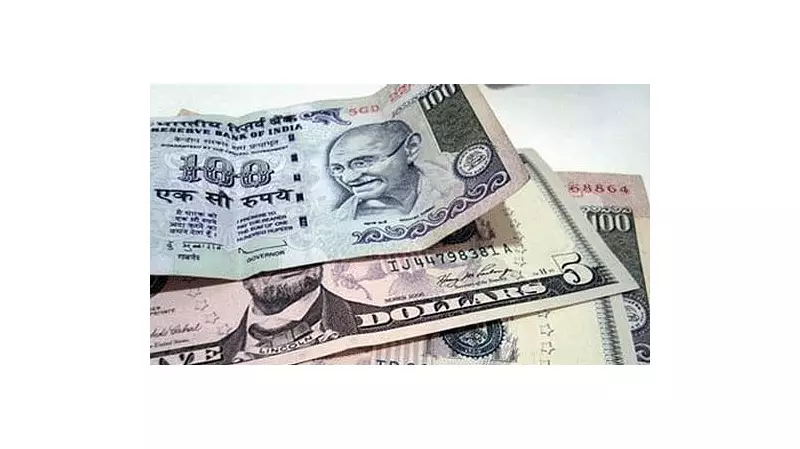
The Indian rupee extended its losses against the US dollar for the fourth straight trading session on Friday, January 5, 2026. The domestic currency closed 8 paise weaker, settling at 90.28 against the greenback, as global risk-off sentiment fueled demand for the American currency.
Key Factors Driving the Rupee's Movement
Market analysts pointed to a combination of global and domestic factors influencing the rupee's trajectory. The primary pressure came from a strengthening US dollar index, which gained ground as investors sought safe-haven assets amid global economic uncertainties. This made the dollar more expensive relative to other currencies, including the rupee.
However, the rupee's decline was somewhat contained by two supportive elements. Significant foreign institutional investor (FII) inflows were recorded in the Indian markets on Friday, bringing in fresh dollar supply. Additionally, a noticeable weakness in global crude oil prices provided a cushion. Since India is a major oil importer, lower crude costs reduce the nation's dollar outflow, thereby supporting the rupee's valuation.

Market Context and Trading Session
The trading session reflected a currency caught between opposing forces. While the overarching global sentiment favored the dollar, the positive domestic cues of capital inflows and cheaper oil imports prevented a steeper fall. The rupee's movement is being closely watched as it impacts import costs, corporate earnings, and the Reserve Bank of India's policy considerations.
The four-day losing streak highlights the ongoing volatility in the forex market, driven by shifting international capital flows and commodity price swings. Traders are now assessing whether this trend will persist or if the supportive factors will help the rupee stage a recovery in the coming sessions.
Implications and Outlook
The rupee's performance has direct consequences for the Indian economy. A weaker rupee makes imports more expensive, potentially fueling inflation, but can also boost export competitiveness. The interplay between the strong dollar index and the mitigating factors of FII inflows and soft oil prices will be crucial in determining the currency's near-term path.
Financial experts suggest that market participants will continue to monitor global risk appetite, the trajectory of the dollar index, and India's own macroeconomic data for further cues on the rupee's direction in the first month of 2026.