

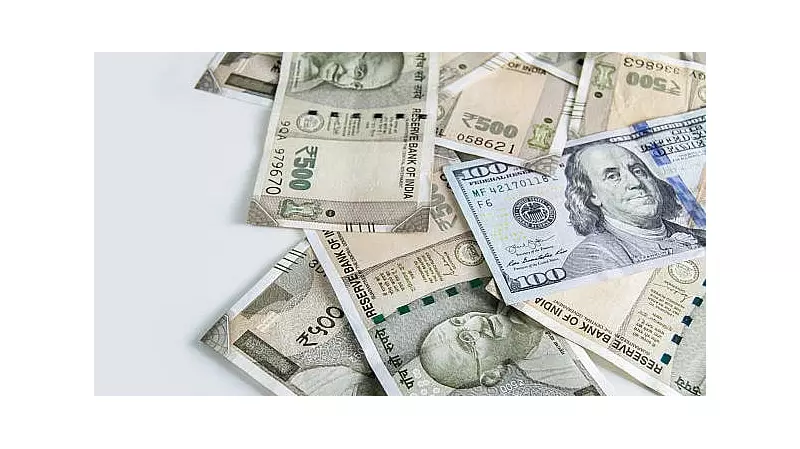
The Indian rupee started the trading session on Tuesday, May 28, on a weaker note, declining against the US dollar. The domestic currency opened lower and extended its losses during the initial hours of trade.
Opening Levels and Day's Movement
At the interbank foreign exchange market, the rupee commenced trading at 89.85 against the US dollar. It soon lost further ground, touching an early low of 89.90, marking a fall of 15 paise from its previous close. On Monday, the rupee had settled at 89.75 against the American currency.
Key Factors Driving the Rupee's Depreciation
Forex traders pointed to multiple headwinds pressuring the local unit. A primary factor was the strength of the US dollar in the international markets. The dollar index, which measures the greenback's performance against a basket of six major currencies, was trading higher at 104.63, up by 0.06%.

Another significant drag was the movement of foreign capital. Foreign Institutional Investors (FIIs) were net sellers in the capital markets on the previous day. They offloaded shares worth Rs 542.66 crore, according to provisional exchange data. This outflow of foreign funds typically increases demand for dollars, putting downward pressure on the rupee.
Broader Market Context and Domestic Sentiment
The domestic equity markets provided a mixed backdrop. The benchmark indices, Sensex and Nifty, were trading with modest gains in early trade, but this positive sentiment did not translate to support for the rupee. Meanwhile, global oil benchmark Brent crude futures saw a slight decline of 0.13% to $83.06 per barrel, which usually offers some relief to a net oil-importing country like India.
Analysts suggested that the rupee's movement is being closely watched amid ongoing global economic uncertainties and shifting expectations regarding interest rate policies from major central banks, particularly the US Federal Reserve.
Market participants are now anticipating further cues from domestic and international economic data releases, which could influence the direction of the rupee-dollar exchange rate in the coming sessions. The resilience of the local currency will likely be tested by the interplay of foreign fund flows, dollar dynamics, and geopolitical developments.






