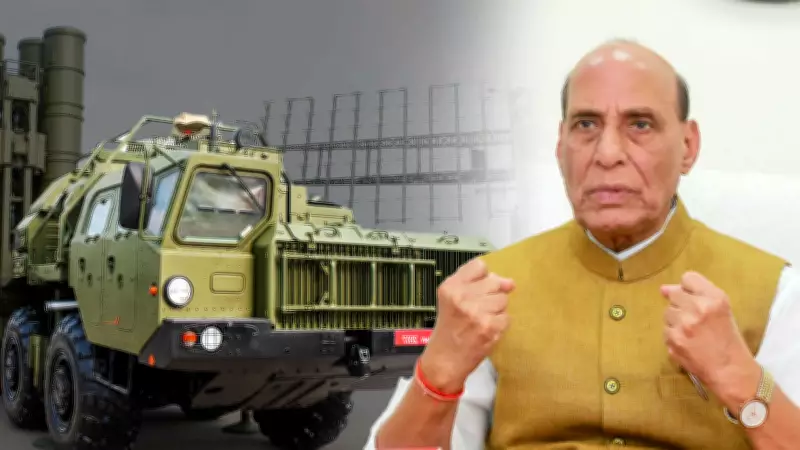
India Strengthens Air Defense With Additional S-400 Systems
In a significant strategic move, India has decided to enhance its aerial defense capabilities by acquiring five more Russian-made S-400 missile systems. This decision comes at a time when global conflicts are demonstrating the critical importance of robust air defense networks.
Defense Procurement Board Gives Green Light
The Defence Procurement Board has officially approved the Indian Air Force's proposal to purchase these additional air defense platforms. This approval represents a crucial step in India's ongoing efforts to modernize its military infrastructure and respond to emerging security challenges.
The procurement process will now advance to the Defence Acquisition Council, which is chaired by Defence Minister Rajnath Singh. Once finalized, this acquisition will bring India's total S-400 units to ten, creating a comprehensive defensive network across strategic locations.

Learning From Contemporary Conflicts
Military analysts suggest this decision has been influenced by several factors, including lessons learned from Operation Sindoor and observations of missile-intensive conflicts in other regions. The changing nature of warfare, particularly in West Asia where tensions remain high, has highlighted the vulnerability of even advanced defense systems like Israel's Iron Dome.
The S-400 system represents one of the most sophisticated air defense platforms available globally. Designed to intercept various aerial threats including aircraft, cruise missiles, and ballistic missiles at extended ranges, these systems provide India with multi-layered protection capabilities.
Creating a Layered Defense Grid
Beyond the S-400 systems, India is also planning to incorporate Pantsir-S1 systems into its defense architecture. This combination aims to establish a comprehensive, layered security grid that can address diverse threats across different altitudes and ranges.
The evolving threat landscape in the region, characterized by increasing drone capabilities and advanced long-range missile technologies, has necessitated this strategic reinforcement. India's approach demonstrates both immediate responsiveness to current challenges and long-term planning for future security requirements.
Strategic Implications and Regional Security
This expansion of India's air defense capabilities occurs against a backdrop of heightened regional tensions and shifting global power dynamics. The decision reflects India's commitment to maintaining air superiority and protecting its territorial integrity against potential aerial threats.
Military experts note that such investments in advanced defense systems represent a prudent approach to national security in an increasingly volatile geopolitical environment. The S-400 systems, with their proven track record and advanced technology, will significantly enhance India's ability to detect, track, and neutralize incoming threats across its vast airspace.
As India continues to navigate complex regional relationships and global partnerships, this strengthening of defensive capabilities sends a clear message about the nation's determination to safeguard its sovereignty while contributing to regional stability through enhanced deterrence.