

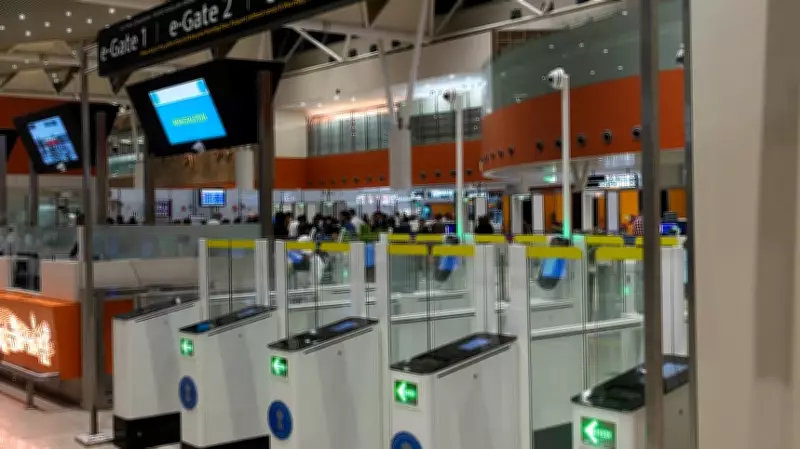
The Central Industrial Security Force (CISF) has proposed integrating facial recognition cameras installed at six major airports across India with a central 'data fusion centre' located in Delhi. This initiative aims to enhance security surveillance and streamline threat detection at key aviation hubs.
Airports Included in the Plan
The six airports earmarked for this integration are Delhi’s Indira Gandhi International Airport, Mumbai’s Chhatrapati Shivaji Maharaj International Airport, Bengaluru’s Kempegowda International Airport, Hyderabad’s Rajiv Gandhi International Airport, Chennai International Airport, and Kolkata’s Netaji Subhas Chandra Bose International Airport. These facilities handle a significant portion of the country’s air traffic, making them critical for national security.
Purpose of the Data Fusion Centre
The proposed data fusion centre in Delhi would serve as a centralized hub for processing and analyzing real-time facial recognition data from these airports. According to CISF officials, the centre would enable faster identification of individuals on watchlists, improve coordination among security agencies, and reduce response times during potential threats. The system is expected to cross-reference images with databases of known suspects, missing persons, and other persons of interest.

Technical and Privacy Considerations
The integration requires robust data-sharing protocols and cybersecurity measures to prevent unauthorized access or breaches. CISF has emphasized that the system will comply with existing privacy laws and guidelines, including those set by the Supreme Court on facial recognition technology. The force has also stated that data retention policies will be strictly followed to avoid misuse.
“The idea is to create a seamless network that can instantly alert security personnel about suspicious individuals,” a CISF official said on condition of anonymity. “This will not only enhance security but also reduce manual verification efforts at airports.”
Implementation Timeline and Challenges
While no specific deadline has been announced, the proposal is currently under review by the Ministry of Home Affairs and the Ministry of Civil Aviation. Challenges include standardizing camera specifications across airports, ensuring uninterrupted data transmission, and addressing public concerns over surveillance. Pilot projects may be conducted at one or two airports before a full rollout.
Broader Security Context
This move is part of a larger push by Indian security agencies to adopt AI-driven surveillance systems. Airports have increasingly deployed facial recognition for passenger processing, but linking them to a central centre represents a significant escalation in data aggregation. The CISF manages security at 67 airports nationwide, and success at these six could lead to expansion to other airports.






