

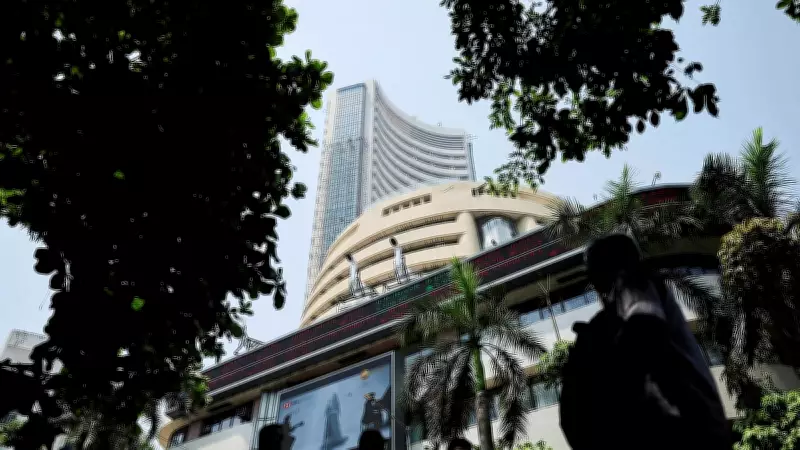
Indian Stock Markets Open Lower on Global Weakness and Foreign Outflows
Indian stock markets experienced a decline in early trading on February 27, 2026, tracking weak global peers and fresh foreign fund outflows. The benchmark indices opened in negative territory, reflecting broader market concerns.
Key Market Movements
The 30-share BSE Sensex dropped 364.62 points to 81,883.99 during initial trade. Similarly, the 50-share NSE Nifty declined 117.15 points to 25,379.40. This downward trend was observed across major sectors, indicating widespread selling pressure.
Factors Driving the Decline
Weak Global Markets: Global stock markets showed weakness, influencing investor sentiment in India. Major indices in Asia and other regions reported losses, contributing to the cautious approach among domestic traders.

Foreign Fund Outflows: Fresh outflows of foreign funds added to the selling pressure. Foreign institutional investors (FIIs) have been reducing their exposure to Indian equities, impacting liquidity and market dynamics.
Market Analysis
Analysts attribute the early trade decline to a combination of external and internal factors. The global economic environment remains uncertain, with geopolitical tensions and monetary policy decisions affecting market stability. Additionally, domestic factors such as corporate earnings and economic data releases are being closely monitored.
Investors are advised to stay vigilant and consider diversifying their portfolios to mitigate risks. The market is expected to remain volatile in the near term, with key support and resistance levels being tested.
Outlook for the Day
Trading activity is likely to be influenced by further global cues and domestic news flow. Market participants will watch for any developments that could impact sentiment, including policy announcements and economic indicators.
In summary, the Indian stock markets opened lower on February 27, 2026, with the Sensex and Nifty recording significant declines due to weak global markets and foreign fund outflows. The situation underscores the interconnected nature of global financial markets and the importance of monitoring international trends.






