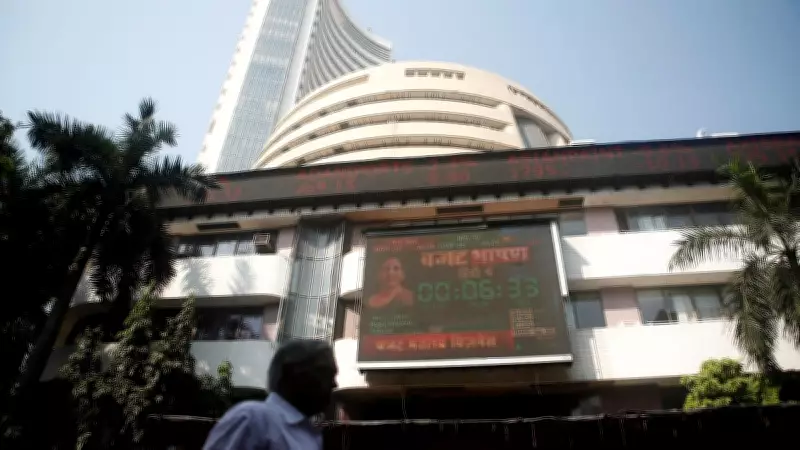
Indian Stock Markets Witness Sharp Decline Amid Geopolitical Turmoil
The Indian stock market experienced a significant downturn on Tuesday, with both major indices falling nearly 2% as escalating tensions in West Asia triggered a surge in crude oil prices. This development has raised concerns among investors about potential inflationary pressures and economic stability.
Market Performance Details
The benchmark 30-share BSE Sensex tumbled by a substantial 1,342.27 points, representing a decline of 1.72%, to close at 76,863.71. Similarly, the broader 50-share NSE Nifty tanked by 394.75 points, or 1.63%, settling at 23,866.85. This sharp correction reflects heightened market volatility driven by external geopolitical factors.
Impact of Crude Oil Price Surge
The primary catalyst for this market sell-off was the rapid increase in crude oil prices, which soared due to growing conflicts in West Asia. Higher oil prices typically lead to increased input costs for various industries, potentially squeezing corporate profits and fueling inflation. This scenario has prompted investors to adopt a cautious approach, resulting in widespread selling across sectors.

Geopolitical Context and Investor Sentiment
The tensions in West Asia have created uncertainty in global markets, with India being particularly vulnerable due to its heavy reliance on oil imports. The geopolitical instability has exacerbated fears of supply disruptions, further driving up oil prices. Market analysts note that such external shocks often lead to short-term corrections as investors reassess risk exposures.
Broader Implications for the Economy
This market downturn underscores the interconnectedness of global events and domestic financial markets. The surge in crude oil prices could have ripple effects on India's trade deficit, currency valuation, and overall economic growth. Policymakers and market regulators are closely monitoring the situation to mitigate any prolonged adverse impacts.
Investors are advised to stay informed about geopolitical developments and their potential ramifications on market dynamics. While short-term volatility is expected, long-term fundamentals of the Indian economy remain robust, providing a foundation for eventual recovery.