

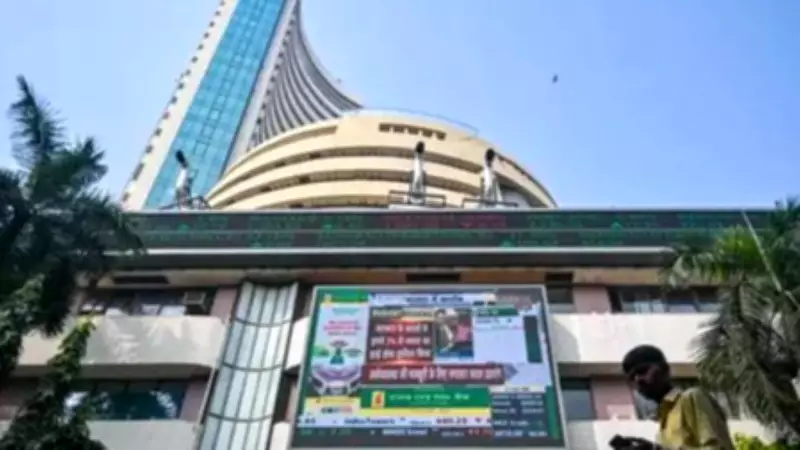
Indian Stock Markets Witness Sharp Sell-Off Amid Geopolitical Turmoil
Benchmark equity indices Sensex and Nifty experienced a severe downturn on Monday, plunging sharply as a brutal global sell-off intensified with the Middle East conflict entering its fourth week. Rising crude oil prices, persistent foreign fund outflows, and a record-low rupee exacerbated investor anxiety, leading to broad-based losses across sectors.
Market Performance: Sensex and Nifty Hit Hard
The 30-share BSE Sensex slumped by 1,836.57 points, or 2.46 percent, closing at 72,696.39 after an intraday drop of as much as 1,974.52 points to 72,558.44. Similarly, the NSE Nifty dropped 601.85 points, or 2.60 percent, settling at 22,512.65. This decline aligns with steep losses in global markets, fueled by fears of prolonged geopolitical disruption and potential energy supply shocks.
Key Factors Driving the Market Crash
Geopolitical Tensions: The deepening Middle East war, with Iran vowing tit-for-tat strikes after a 48-hour ultimatum from former US President Donald Trump, has heightened uncertainty. Analysts note that investor sentiment remains fragile amid escalating tensions in West Asia, which have pushed crude oil prices sharply higher.

Rising Crude Prices: Brent crude, the global oil benchmark, rose 0.97 percent to $113.3 per barrel, adding pressure on India's oil-importing economy. This surge in energy costs compounds inflation and fiscal worries, further dampening market confidence.
Foreign Fund Outflows: Foreign Institutional Investors (FIIs) sold equities worth Rs 5,518.39 crore on Friday, continuing a trend of heavy exits. So far this month, foreign investors have pulled out approximately Rs 88,180 crore (about $9.6 billion) from Indian equities, reinforcing negative sentiment.
Rupee Weakness: The Indian rupee fell to a record low, exacerbating the sell-off by triggering more FII selling and pressuring equities amid rising global bond yields.
Sectoral and Stock-Specific Movements
The sell-off was broad-based, with significant damage across consumption, metals, real estate, and banking sectors. Titan Company was the biggest loser among Sensex stocks, tumbling 6.24 percent, followed by Trent, UltraTech Cement, Bharat Electronics, InterGlobe Aviation, Tata Steel, and HDFC Bank.
In contrast, a handful of IT and utility stocks offered limited resistance. HCL Tech, Power Grid, and Infosys ended in the green, bucking the overall negative trend.
Broader Market Indices and Sectoral Performance
Pain was even sharper outside frontline indices, indicating a wider risk-off mood. The BSE MidCap Select index tanked 3.82 percent, while the SmallCap Select index plunged 3.66 percent. All sectoral indices ended lower, with consumer durables falling the most at 4.91 percent, followed by metal (4.76 percent), realty (4.75 percent), and services (4.70 percent).
Market breadth remained extremely weak, with 3,798 stocks declining compared to just 635 advancing, while 123 remained unchanged on the BSE.
Global Market Context
The weakness was not confined to India. Major Asian markets, including South Korea's Kospi, Japan's Nikkei 225, Shanghai's SSE Composite, and Hong Kong's Hang Seng, ended sharply lower, with the Kospi plunging 6.49 percent. European markets also traded with deep losses, and US markets had ended significantly lower on Friday, adding to the negative global backdrop.
Cumulative Losses Since Conflict Began
Monday's slump adds to deep losses since the Middle East conflict began on February 28. The Sensex has fallen 8,590.8 points, or 10.56 percent, while the Nifty has shed 2,666 points, or 10.58 percent. This erosion of gains in less than a month reflects market pricing of a prolonged conflict, sustained energy stress, and a tighter macroeconomic environment.
Expert Insights on Market Sentiment
Ajit Mishra, SVP of research at Religare Broking Ltd, stated that markets witnessed a sharp sell-off amid weak global cues and escalating geopolitical tensions. He emphasized that rising oil prices, continued FII outflows, and rupee weakness significantly hit risk appetite.

Vinod Nair, head of research at Geojit Investments Ltd, noted that domestic markets mirrored weakness across Asia as investors worried about potential disruptions to global energy supplies. He highlighted that rising global bond yields and the rupee's record low further pressured equities.
Outlook and Investor Caution
Despite Domestic Institutional Investors (DIIs) buying shares worth Rs 5,706.23 crore on Friday, partially cushioning the fall, the broader trend remains negative. Persistent foreign outflows, combined with currency weakness and expensive oil, reinforce fears that the market may stay vulnerable even on rebound days, urging investors to exercise caution amid ongoing uncertainties.





