

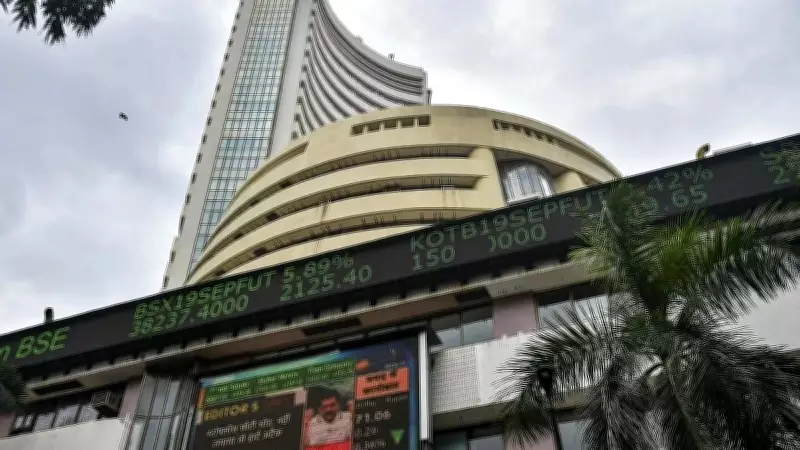
Indian Stock Markets Witness Sharp Decline Amid Ongoing West Asia Conflict
The Indian stock markets opened with significant losses on Monday, as the ongoing military conflict in West Asia entered its fifth consecutive week. The persistent geopolitical tensions have created widespread uncertainty in global financial markets, leading to a substantial sell-off in early trading sessions.
Major Indices Experience Substantial Losses
In early trade, the benchmark 30-share BSE Sensex tumbled by a staggering 1,191.24 points, settling at 72,391.98. This represents one of the most substantial single-day declines in recent months, reflecting investor anxiety over the prolonged conflict. Similarly, the broader 50-share NSE Nifty index slumped by 349.45 points to reach 22,470.15, indicating that the market downturn was widespread across various sectors.
The sharp decline in both indices highlights how international geopolitical events can directly impact domestic financial markets. Market analysts attribute this downturn to several key factors related to the West Asia situation:

- Increased risk aversion among global investors
- Concerns about potential disruptions to oil supplies and energy prices
- Uncertainty regarding the conflict's duration and potential escalation
- Broader implications for global trade and economic stability
Geopolitical Tensions Drive Market Volatility
The fifth week of the West Asia conflict has introduced renewed volatility into financial markets worldwide. As the situation continues without clear resolution, investors are becoming increasingly cautious about their exposure to emerging markets, including India. The conflict's persistence has raised questions about regional stability and its potential to affect international economic relationships.
Market experts note that such geopolitical events typically trigger flight-to-safety movements, where investors shift their capital from riskier assets to more secure options. This pattern has been evident in the current market behavior, with significant outflows from equity markets into traditionally safer assets.
Broader Implications for Indian Economy
While the immediate impact is visible in stock market indices, the prolonged conflict in West Asia could have more extensive consequences for the Indian economy. Potential areas of concern include:
- Energy security and pricing: India imports a substantial portion of its oil requirements, making it vulnerable to price fluctuations in global energy markets.
- Trade relationships: Disruptions in key shipping routes could affect India's export and import activities with various regions.
- Foreign investment flows: Continued uncertainty may lead to reduced foreign institutional investment in Indian markets.
- Currency stability: The Indian rupee could face pressure if capital outflows intensify.
The market's reaction underscores the interconnected nature of global economies and how regional conflicts can reverberate through financial systems thousands of miles away. As the West Asia situation enters its fifth week without signs of immediate resolution, market participants are preparing for continued volatility and adjusting their investment strategies accordingly.






