

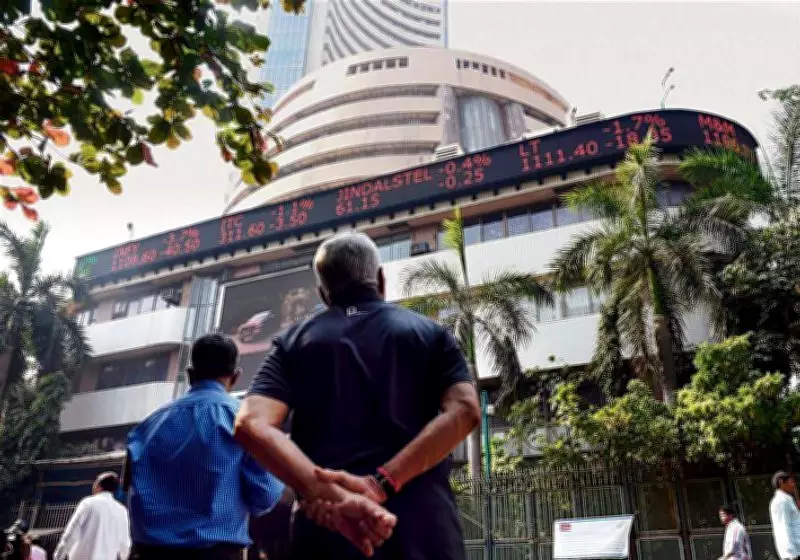
West Asia Turmoil Triggers Sharp Sell-Off in Indian Stock Markets
Indian equity benchmarks plunged dramatically on Monday, succumbing to a wave of panic selling triggered by escalating geopolitical tensions in the West Asia region. The benchmark BSE Sensex nosedived by a staggering 1,123 points, while the broader NSE Nifty 50 index tumbled by 1.55 percent, reflecting deep-seated investor anxiety over potential global economic disruptions.
Market Indices Witness Steep Declines
The trading session was marked by intense volatility and broad-based selling pressure across sectors. The 30-share Sensex closed at a significantly lower level, shedding over a thousand points in a single day. Similarly, the Nifty 50 index breached key psychological support levels, ending the day deep in the red. This sharp correction erased a substantial portion of the gains accumulated in recent weeks, highlighting the market's vulnerability to external geopolitical shocks.
Geopolitical Tensions in West Asia Spook Investors
The primary catalyst for the market meltdown was the rapidly deteriorating situation in West Asia. Renewed conflicts and heightened military activities in the region have raised serious concerns about stability in a critical global oil-producing area. Investors fear that prolonged turmoil could disrupt crude oil supplies, leading to a spike in energy prices and fueling inflationary pressures worldwide. This uncertainty prompted foreign institutional investors (FIIs) and domestic participants to adopt a risk-off approach, liquidating equity holdings in favor of safer assets.

- Geopolitical Risk: Escalating tensions in West Asia created a cloud of uncertainty over global trade and economic growth prospects.
- Oil Price Concerns: Fears of potential supply disruptions from the region threatened to push crude oil prices higher, negatively impacting India's import bill and fiscal deficit.
- Global Market Weakness: Negative cues from other major international markets, including Asia and Europe, exacerbated the selling pressure in Indian equities.
- Sectoral Damage: Banking, automobile, and energy stocks were among the worst hit, as these sectors are particularly sensitive to economic and oil price fluctuations.
Broader Market Impact and Analyst Outlook
The sell-off was not confined to the frontline indices; mid-cap and small-cap stocks also witnessed significant declines, indicating a pervasive risk aversion among market participants. Market breadth was overwhelmingly negative, with a vast majority of stocks closing lower. Analysts caution that the volatility may persist in the near term until there is clarity on the geopolitical front. They advise investors to remain cautious and focus on fundamentally strong companies with robust balance sheets, rather than attempting to time the market during such turbulent phases.
This episode underscores the interconnected nature of global financial markets, where events in one region can swiftly trigger ripple effects across the world. The sharp correction serves as a stark reminder of the inherent risks in equity investing, especially during periods of heightened geopolitical uncertainty.






