

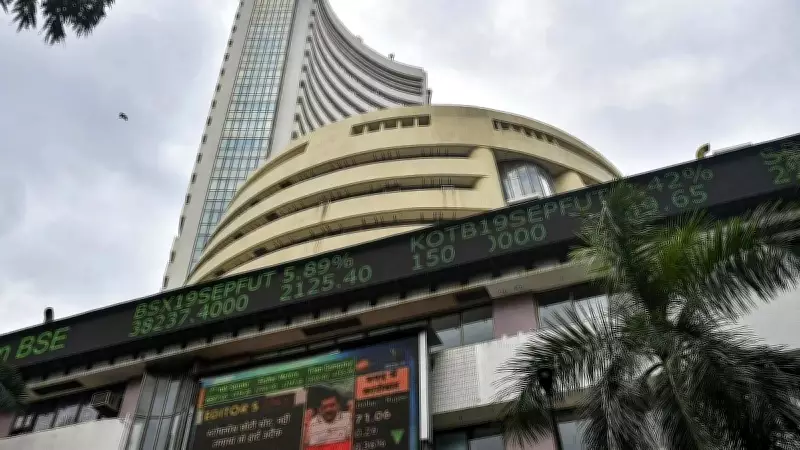
Indian Stock Markets Experience Sharp Decline in Early Trading Session
The Indian stock market opened on a deeply negative note on Wednesday, March 27, 2026, with both benchmark indices recording significant losses. The BSE Sensex plummeted by a substantial 926.92 points during the early trading hours, reflecting widespread investor anxiety and selling pressure across multiple sectors.
Nifty Follows Suit with Substantial Drop
Mirroring the downward trend of the Sensex, the NSE Nifty also witnessed a steep decline, falling by 280.95 points in the initial trading session. This synchronized drop in both major indices indicates a broad-based market correction rather than isolated sectoral weakness.
Rupee Hits Fresh Record Low Against US Dollar
Adding to the financial market turmoil, the Indian rupee continued its downward trajectory, slumping by 20 paise to close at a fresh record low of 93.96 against the US dollar. This marks the weakest closing level for the rupee in recent history, exacerbating concerns about currency stability and import costs.

The dual pressure of heavy Foreign Institutional Investor (FII) outflows and escalating geopolitical tensions in West Asia has created a perfect storm for Indian financial markets. Investors remain on edge as these external factors combine with domestic economic considerations to drive market sentiment.
Key Factors Driving the Market Decline
- Substantial FII outflows from Indian equities have drained liquidity and created selling pressure
- Geopolitical tensions in West Asia have increased global risk aversion among investors
- Currency weakness with the rupee hitting record lows against the dollar
- Broad-based selling across multiple market sectors and segments
The combination of these factors has created a challenging environment for market participants, with analysts closely monitoring whether this represents a temporary correction or the beginning of a more sustained downward trend. Market observers are particularly concerned about the persistence of FII outflows, which have been a consistent feature of recent trading sessions.
As trading continues, investors are watching for any signs of stabilization or intervention that might stem the decline. The record low rupee level adds another layer of complexity to the situation, potentially impacting import costs and corporate earnings for companies with significant foreign currency exposure.






