

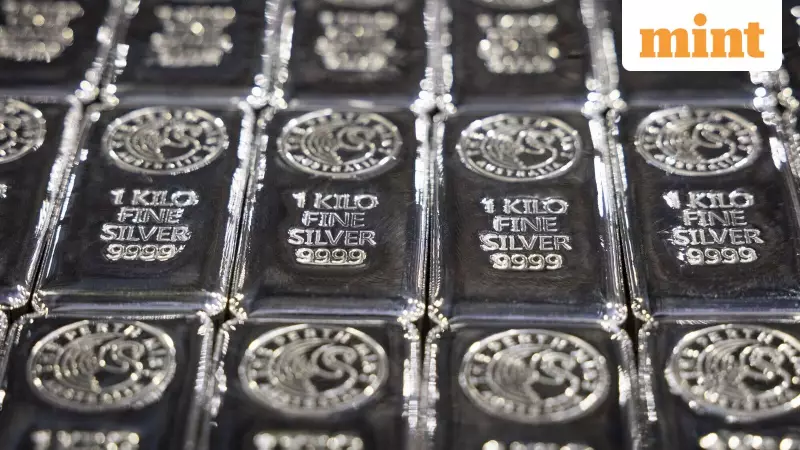
For centuries in India, silver has been cherished as a symbol of purity and prosperity, woven into the cultural fabric through jewellery, coins, and ceremonial gifts. The very name of the national currency, the rupee, finds its roots in the Sanskrit 'rupyakam', meaning wrought silver. Yet, it has long lived in the shadow of its more illustrious cousin, gold. Today, a profound transformation is underway. Silver is shedding its 'poor man's gold' image and emerging as a distinct, multi-faceted asset, propelled by powerful financial and industrial forces within India and globally.
The ETF Revolution: Financial Demand Gets a Digital Makeover
India's appetite for silver is immense, with annual consumption ranging between 5,000 to 7,000 tonnes. While jewellery remains the largest single use, accounting for 35% of consumption, a seismic shift is occurring in how physical silver is acquired for investment. Historically, bullion dealers dominated this space. However, 2024 marked a turning point.
In that year, silver Exchange-Traded Funds (ETFs) accounted for a staggering 42% (783 tonnes) of the total 1,859 tonnes of physical investment demand. This is remarkable given that the first Indian silver ETF was launched only in 2022. By the end of 2024, these funds collectively held 1,183 tonnes of silver. The frenzy continued into 2025, with such intense demand that several silver fund-of-funds had to temporarily suspend lump-sum investments in October 2025.

This represents a fundamental change: the robust demand for physical silver is now being driven by retail investors pouring money into ETFs, rather than traditional bullion traders. As of October 2025, silver ETFs boasted about 2.5 million investor folios with Assets Under Management (AUM) soaring to ₹42,537 crore, a massive jump from 0.45 million folios and ₹12,331 crore AUM just a year earlier in October 2024.
Industrial Engine: EVs, Solar, and AI Fuel a Structural Shift
Parallel to the financial boom is a powerful industrial surge. Globally, industrial applications now make up 59% of total silver demand, up from 49% a decade ago. Silver's exceptional electrical conductivity and durability make it indispensable for modern technology.
The electric vehicle (EV) revolution is a prime demand driver. According to The Silver Institute, while a conventional petrol car uses 15-28 grams of silver, a hybrid uses 18-34 grams, and a battery EV uses 25-50 grams. With strong government support, India's burgeoning EV market is set to significantly boost silver consumption.
Another critical sector is solar energy. Aligned with India's target of 500GW of renewable energy capacity by 2030 (with 300GW expected from solar), every additional gigawatt of solar power is estimated to consume 80-100 tonnes of silver in panels and grid infrastructure. Add to this the growth of data centres, consumer electronics, and advancements in AI and aerospace, and silver's role as a core economic input is firmly cemented. In fact, the US government reclassified silver as a critical mineral in November 2025, highlighting its strategic importance.
Safe Haven with Sheen: Is Silver the New Gold?
The combination of booming demand and constrained supply—silver has been in a supply deficit since 2021—has supercharged its price. In 2025, silver prices skyrocketed by 87%, outperforming gold's 54% gain. This raises the question: is silver replacing gold as the ultimate safe haven?
Silver does act as a crisis hedge, with prices rising during periods of inflation and geopolitical uncertainty, though it often lags behind gold and exhibits higher volatility. However, a key development is set to enhance its financial utility. The Reserve Bank of India has notified that from 1 April 2026, formal lenders like banks will be permitted to offer loans against silver jewellery and coins. This move could unlock vast household silver holdings and bring silver loans into the mainstream, potentially making it as collateral-friendly as gold.

The narrative is not about silver dethroning gold, but about it carving its own unique niche. It is an asset that offers wealth preservation in turbulent times (like a monetary metal) and growth upside during economic expansion (like an industrial commodity). This dual character, coupled with India's specific drivers—increasing financialization of savings, a search for affordable alternative investments, and rising per capita wealth—positions silver for a sustained re-rating.
Global sentiment adds further tailwinds, with central banks like Russia's reportedly buying silver to diversify reserves amid concerns over currency debasement. For a world grappling with multiple uncertainties, silver is evolving into an asset class of its own, shining with a new, independent sheen.





