

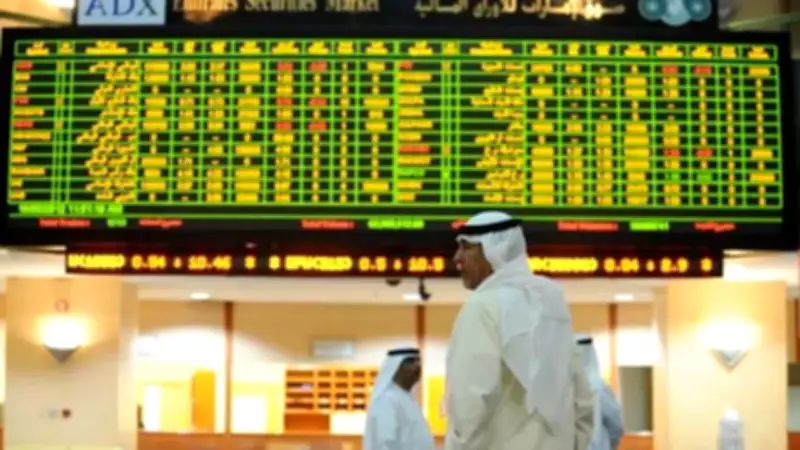
UAE Stock Markets Experience Sharp Declines After Trading Resumes Post Iran-Israel Conflict
Stock markets in the United Arab Emirates witnessed significant losses on Wednesday as trading activities resumed following an unusual two-day suspension. This halt was triggered by Iran's missile and drone attacks over the weekend, which targeted airports, ports, and residential areas across the emirates, prompting investors to reassess heightened geopolitical risks in the region.
Dubai and Abu Dhabi Exchanges Reopen with Steep Drops
When trading resumed, Dubai's benchmark index plummeted by 4.7 percent, marking its steepest intraday decline since May 2022. The sell-off was broad-based, with blue-chip developer Emaar Properties leading the losses by falling 4.9 percent, while budget airline Air Arabia dropped 5 percent. Similarly, in Abu Dhabi, the main index declined by 3.3 percent, also the sharpest fall since May 2022.
Key financial stocks were heavily impacted, with Emirates NBD, the UAE's top lender, declining 5 percent, and First Abu Dhabi Bank, the largest lender in the UAE, falling 5 percent. Energy companies such as Dana Gas and TAQA each lost 5 percent, and property developer Aldar Properties declined 5 percent. ADNOC-linked energy companies across various sectors, including fuel distribution, drilling, logistics, and gas, faced pressure as the broader energy complex sold off.

Market Measures and Investor Sentiment
To contain volatility, both the Dubai Financial Market (DFM) and Abu Dhabi Securities Exchange (ADX) temporarily set the lower price limit for securities at minus 5 percent. The ADX also instructed listed companies to immediately assess their financial and operational exposure and disclose any material information that could influence investor decisions.
Ahmad Assiri, a research strategist at Pepperstone, commented to Reuters, "The closure sent investors the message that regulators are prioritising orderly price discovery over a volatility rollercoaster." He added that traders should anticipate a volatile phase as markets reprice two days of global and regional developments, with trading volumes potentially surging due to pent-up orders.
Broader Impact on Gulf and Regional Markets
The geopolitical tensions have placed additional pressure on airlines and tourism companies, with over 20,000 flights cancelled across the region and governments rushing to repatriate stranded travellers. In contrast, Saudi Arabia's benchmark index rose 1 percent, extending gains from the previous session, with Al Rajhi Bank gaining 0.9 percent and petrochemical giant Saudi Basic Industries Corp trading 1.2 percent higher.
Elsewhere in the Gulf, Qatar's main index rose 0.6 percent, while Oman's Muscat index declined 0.7 percent, Bahrain's benchmark dropped 0.8 percent, and Kuwait's market edged 0.2 percent lower. Outside the Gulf region, Egypt's blue-chip index retreated 1.6 percent.
Oil Prices and Economic Implications
Oil prices climbed around 3 percent as the US-Israeli war on Iran disrupted Middle East supplies, although gains slowed after US President Donald Trump suggested the US Navy could escort vessels through the Strait of Hormuz. The combined market capitalisation of companies listed on the ADX and DFM stands at approximately $1.1 trillion, highlighting the significant economic impact of these market movements.
Assiri noted, "Because the Saudi market has already absorbed the initial shock, recovering from a 5% Sunday drop to post gains by Tuesday, the UAE reopening is expected to follow this recovery template to some extent." This suggests a potential for stabilization in the coming sessions as markets adjust to the evolving geopolitical landscape.






