

Wall Street Continues Downtrend Amid Economic Uncertainty
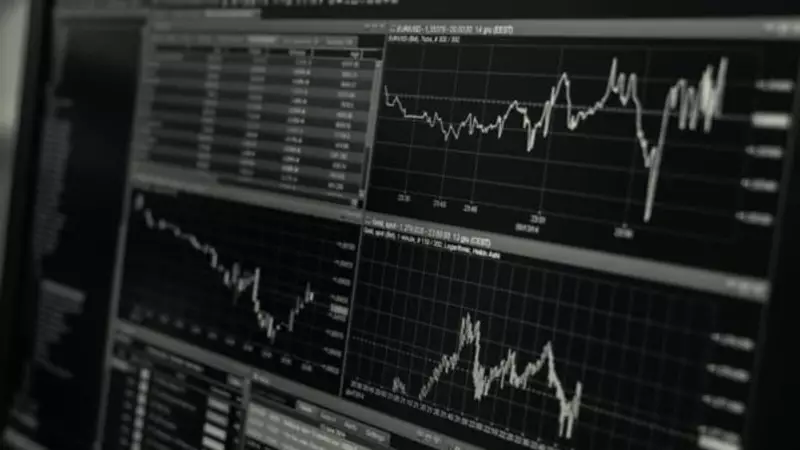
Wall Street's primary stock indexes extended their losses into a second consecutive trading session on Friday, positioning themselves for weekly declines as growing concerns about the economy and inflated technology sector valuations continued to dampen market sentiment.
The Dow Jones Industrial Average dropped 138.50 points, or 0.30%, to 46,773.80, while the S&P 500 declined by 46.63 points, or 0.69%, to 6,673.69. The technology-heavy Nasdaq Composite experienced the most significant decline, falling 278.31 points, or 1.21%, to 22,775.68.
Technology Sector Leads Market Decline
The technology sector faced substantial pressure, with the Nasdaq declining almost 2% during Thursday's trading session. This downward trend followed warnings from Wall Street executives earlier this week about a potential market correction.

Sam Stovall, chief investment strategist at CFRA Research, commented on the situation, stating: "There is a continuation of the concern of a possible pullback... it's traditional early November weakness triggered by elevated valuations and the running out of catalysts to support or propel the market."
Major technology stocks felt the impact significantly. Nvidia fell 2.8% while Broadcom declined by 2.2%. Both the information technology sector and the broader semiconductor index were heading toward their most substantial weekly declines in seven months.
Corporate Developments and Earnings Performance
In significant corporate news, Tesla shareholders approved the largest corporate pay package in history for CEO Elon Musk, valued at approximately $1 trillion. Despite this approval, Tesla shares fell 3.3%, reflecting broader market sentiment and weighing down the consumer discretionary sector.
On the earnings front, data compiled by LSEG revealed impressive results. As of Thursday, 83% of the 424 S&P 500 companies that reported earnings had exceeded Wall Street expectations. This represents the highest rate of better-than-expected results since the second quarter of 2021.
Expedia emerged as a standout performer, jumping 16% to lead the S&P 500 after the online travel platform raised its full-year revenue growth forecast and reported third-quarter profits that surpassed expectations.
Economic Concerns and Market Indicators
The prolonged U.S. government shutdown has created significant information gaps, leaving Federal Reserve policymakers divided on future monetary policy decisions. Private economic data presents a mixed picture of the economy's health.
White House economic advisor Kevin Hassett acknowledged the situation, stating in an interview with Fox Business Network that the economic impact of the shutdown was far worse than expected.
Adding to economic concerns, the preliminary reading of the University of Michigan's Consumer Sentiment Index came in at 50.3 this month, significantly lower than the 53.2 estimate predicted by economists surveyed by Reuters.
The CBOE Volatility Index, commonly known as Wall Street's fear gauge, reached its highest level in more than two weeks, indicating increased investor anxiety.
Other notable stock movements included Block slumping 10.5% after missing third-quarter profit expectations, and Take-Two Interactive declining 6.6% after delaying the launch of its popular video game GTA VI to November 2026.
Market breadth showed declining issues outnumbering advancers by a 1.29-to-1 ratio on the NYSE and a 1.99-to-1 ratio on the Nasdaq. The S&P 500 recorded 8 new 52-week highs and 10 new lows, while the Nasdaq Composite saw 18 new highs and 211 new lows.






