

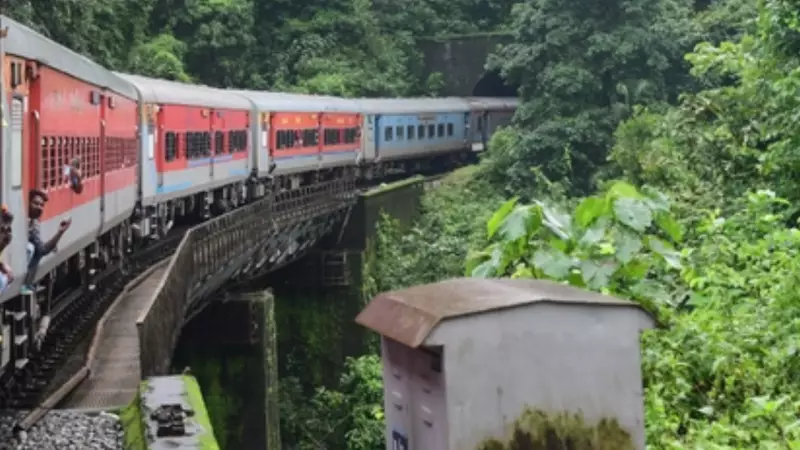
In a significant move aimed at enhancing long-distance rail connectivity, the South Western Railway (SWR) zone has announced a major revision of its official timetable, set to take effect from January 2026. The core of this change is a planned increase in the speed of 123 trains, a decision that will impact the schedules of a total of 414 trains operating across its network.
Major Upgrades and Reclassification of Trains
The railway administration's strategy involves more than just tweaking schedules. As part of this efficiency drive, eleven existing express trains will be formally reclassified as superfast trains. This upgrade is not merely a change in name; it mandates higher average speeds and will directly result in reduced travel times for passengers. This approach allows SWR to deliver quicker journeys without the immediate need to introduce entirely new services, optimizing the existing network's capacity.
This speed revision initiative builds upon a consistent pattern of network expansion and modernization undertaken by SWR. The year 2025 alone saw the introduction of 18 new trains, which included two modern Vande Bharat services. Furthermore, fifty trains were given new stoppages to improve connectivity, and eight were upgraded with safer and more comfortable LHB coaches.

Key Routes to Get Significant Time Savings
Passengers on several prominent long-distance routes are poised to benefit substantially from the revised schedules. Notable examples include the KSR Bengaluru–Jodhpur Express, which is slated to complete its journey 1.5 hours earlier. Similarly, the Hubballi–Dadar Express will reach Mumbai one hour sooner, offering relief to travellers on these busy corridors.
The most dramatic reduction, however, is reserved for the KSR Bengaluru–Gandhidham Express. Its arduous journey will be shortened by a full three hours, bringing the total travel time down from 38 hours to 35 hours. This enhancement is expected to significantly strengthen rail connectivity between Karnataka and Gujarat, making the route more attractive for business and leisure travellers alike.
Operational Adjustments and Passenger Feedback
Railway officials clarified that these faster schedules are being achieved by carefully adjusting the built-in ‘slack time’ or buffer time in the existing timetables. This extra time is originally incorporated to absorb operational delays. By optimizing this buffer, trains can run faster on paper without compromising operational safety, allowing for more efficient use of infrastructure.
It is important to note that while over a hundred trains will run faster, the comprehensive timetable revision affecting 414 trains means that some services may see their schedules adjusted, potentially resulting in slightly longer journey times. Officials state these adjustments are necessary to balance overall network capacity and ensure smooth operations across all routes.
However, not all changes have been welcomed. One revision that has sparked criticism from the public involves the Hubballi–Bengaluru Superfast Express, which is now scheduled to depart an hour later, after midnight. Passengers, including working professionals, families, and elderly travellers, have raised concerns about the inconvenience and safety implications of this new late-night departure time.
This annual timetable exercise is part of a continuous effort to optimize train operations. A similar update last year resulted in nearly 100 trains being sped up. The latest changes underscore South Western Railway's focus on improving efficiency, particularly for long-distance travellers connecting Karnataka to key destinations like Gujarat, Rajasthan, and Maharashtra, ultimately aiming to reduce journey fatigue and enhance regional connectivity.






