

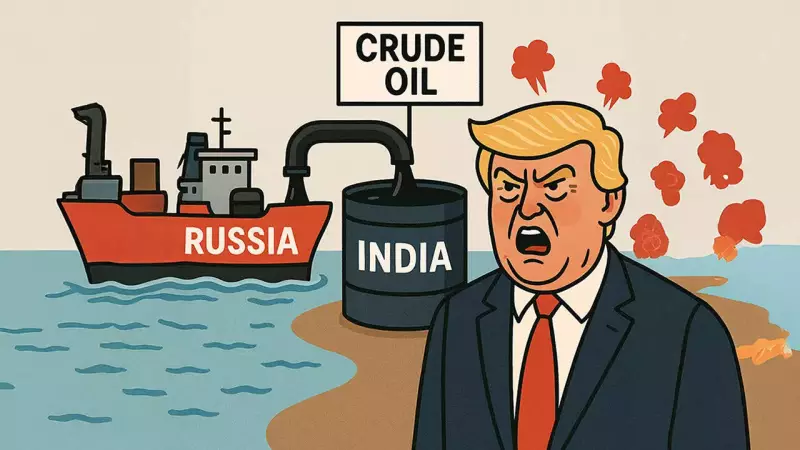
A potential economic earthquake looms over India-US trade relations, sparked by a controversial legislative proposal in Washington. The catalyst is a bill, now reportedly endorsed by former President Donald Trump, that threatens to impose staggering 500% tariffs on countries, including India, for their continued purchase of Russian crude oil.
The Bill and Its Bipartisan Backing
US Senator Lindsey Graham announced on Wednesday that he held a "very productive meeting" with Trump, securing the former president's support for the bipartisan Russia sanctions legislation. The bill, known as the Sanctioning Russia Act of 2025, has been under discussion for months and is co-sponsored by Senator Richard Blumenthal.
Graham stated the legislation is designed to "punish those countries who buy cheap Russian oil, fuelling Putin’s war machine." He explicitly named China, India, and Brazil as targets, arguing the bill would give Trump "tremendous leverage" to incentivise them to stop these purchases. Graham expressed hope for a strong bipartisan vote, possibly as early as next week.

Why India Faces Disproportionate Risk
While both China and India are major importers of Russian crude, recent US trade actions have selectively targeted New Delhi. According to analysis by the Global Trade Research Initiative (GTRI), the US has already imposed tariffs of up to 50% on Indian goods, with a 25% component directly linked to India's Russian energy imports. China, in contrast, has avoided similar punitive measures.
Ajay Srivastava, founder of GTRI, warns this selective pattern is likely to continue. "Even if the bill were to clear the Senate... it would in practice target India alone, while China would remain beyond reach," he notes. US officials reportedly fear Beijing's retaliation could involve restricting rare-earth supplies, crucial for American tech and defence manufacturing.
Catastrophic Consequences for Indo-US Trade
The implications of a 500% tariff are severe. GTRI estimates it could effectively halt India’s $120 billion in annual exports to the United States. This includes both goods and, potentially through secondary measures, services. While US customs can levy duties on physical goods, taxing services would be more complex, possibly involving taxes on US companies for payments made to Indian service providers.
Srivastava urges India to take a clear, decisive position on Russian oil imports and communicate it to Washington. He also highlights a glaring contradiction in US policy: "US lawmakers speak of 'punishing' countries for purchasing Russian oil even as Washington moves aggressively to seize Venezuela’s oil assets. This is not a rules-based trading order; it is worse than the law of the jungle, as it is unevenly applied."
The bill's path remains uncertain. While Trump has previously used presidential powers for tariffs, this congressional route adds a layer of complexity. Furthermore, the practicality of enforcing a 500% tariff, especially on services, is legally ambiguous. However, the mere proposal signals escalating trade tensions that could redefine one of the world's most critical economic partnerships.






