

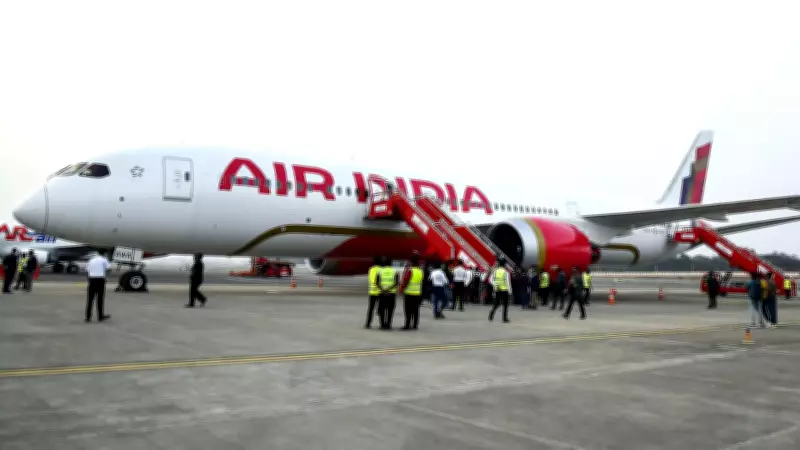
Air India has taken immediate action by grounding one of its Boeing 787 Dreamliner aircraft, registration VT-ANX, following a concerning report from the flight crew regarding a malfunction in the fuel control switch locking mechanism. The incident occurred on a flight operating from London Heathrow to Bengaluru, raising significant safety questions in the wake of a previous fatal accident involving the same aircraft type.
Flight Details and Immediate Response
The affected aircraft departed London Heathrow at 9:19 PM local time on Sunday and successfully landed in Bengaluru at 11:54 AM local time on Monday. According to airline sources, the pilots observed an issue with the fuel control switch after landing and promptly reported it to authorities. Air India responded swiftly by grounding the aircraft and initiating a priority investigation in collaboration with the original equipment manufacturer (OEM).
Technical Nature of the Malfunction
The Safety Matters Foundation provided detailed technical insight into the incident, stating that on February 2, 2026, during the operation of Air India Flight AI132, the crew reported abnormal behavior of the LEFT engine fuel control switch on Boeing 787 VT-ANX. During engine start procedures, the switch failed to remain securely locked in the RUN position on two separate attempts, instead moving towards the CUTOFF position. This specific malfunction is particularly dangerous as it could, under certain operational conditions, lead to an inadvertent engine shutdown during flight, posing a severe safety risk.

Historical Context: The Ahmedabad Tragedy
This latest incident assumes grave significance due to the tragic crash of Air India Flight AI171 on June 12, 2025. That flight, operated by a Boeing 787 (VT-ANB), crashed in Ahmedabad mere seconds after takeoff, resulting in the loss of 260 lives. The preliminary investigation revealed that the aircraft's fuel supply to its engines dried up because the fuel control switch had moved from the RUN to CUTOFF position. To this day, investigators have not conclusively determined whether this was caused by a mechanical fault or another factor.
Following the Ahmedabad disaster, cockpit voice recordings captured one pilot asking the other why he had cut off the fuel control switch, with the other pilot responding that he had not done so, highlighting the mysterious nature of the switch's movement.
Air India's Official Statement and Previous Checks
In response to the Bengaluru incident, Air India issued a formal statement acknowledging the pilot's report of a possible defect on the fuel control switch of the Boeing 787-8 aircraft. The airline confirmed that the matter has been communicated to India's aviation regulator, the Directorate General of Civil Aviation (DGCA).
Significantly, Air India revealed that after the Ahmedabad crash, the airline had conducted comprehensive checks on the fuel control switches of all Boeing 787 aircraft in its fleet, following a directive from the DGCA. At that time, these inspections reportedly found no issues with any of the switches.
Regulatory Investigation and Industry Concerns
The DGCA has launched an investigation into this latest safety scare and has formally sought detailed information from Air India regarding the incident. Comments have also been requested from Boeing, the aircraft manufacturer, as the fuel control switches on Boeing Dreamliners have come under intense scrutiny since the Ahmedabad tragedy.
Expert Analysis and Historical Warnings
Aviation safety expert Captain Amit Singh expressed deep concern about the incident, particularly because it occurred after Air India had publicly stated that precautionary checks across its entire 787 fleet revealed no issues. "This raises urgent questions," Singh emphasized. "Were the checks thorough enough? Is this a new, recurring defect that requires immediate attention? Passengers and crew members deserve unambiguous answers to ensure their safety."

Singh's Safety Matters Foundation further highlighted that this incident mirrors a known risk previously identified by regulatory authorities. In 2018, the US Federal Aviation Administration (FAA) issued a safety alert for operators, explicitly warning that certain fuel control switches, including those installed on Boeing 787 aircraft, could malfunction in precisely this manner, thereby increasing the risk of accidental engine shutdown during flight operations. The FAA had recommended inspection and replacement of affected units at that time.
Ongoing Safety Implications
The recurrence of fuel control switch issues on Boeing 787 Dreamliners operated by Air India has created serious safety concerns within the aviation community. While Air India maintains that passenger and crew safety remains its top priority, this latest incident underscores the need for more rigorous inspection protocols and potentially design modifications to prevent similar occurrences in the future.
As investigations continue by both Air India and regulatory authorities, the aviation industry watches closely, hoping for definitive answers that will prevent any repetition of the tragic events witnessed in Ahmedabad. The grounding of VT-ANX represents a precautionary measure, but it also serves as a stark reminder of the critical importance of mechanical reliability in aviation safety systems.





