

Amritsar Traders Bear Brunt of Regional Instabilities, Facing Heavy Financial Losses
In Amritsar, local traders are experiencing significant financial strain due to escalating regional conflicts, including tensions between the US, Israel, and Iran, as well as ongoing disputes between Pakistan and Afghanistan. These geopolitical issues have severely disrupted key trade routes, leading to substantial losses for farmers, commission agents, and vegetable traders across the region.
Export Containers Stranded, Commodity Prices Plummet
Jatinder Khurana, secretary of the Amritsar Fruits and Vegetables Merchant Association, reported on Wednesday that export containers from Amritsar and other areas destined for Iran are currently stranded in transit. This logistical bottleneck has resulted in sharp price declines for several agricultural commodities. For instance, grapes that previously sold for Rs 100 to Rs 120 per kilogram are now trading at only Rs 50 to Rs 65 per kilogram. Similarly, onion prices have dropped to around Rs 12 per kilogram from an earlier range of Rs 18 to Rs 20 per kilogram.
Khurana also noted that prices for various herbs imported from Afghanistan have decreased. Traditionally, these consignments were routed from Afghanistan to Dubai and then shipped to India through major ports like Mundra in Gujarat and Nhava Sheva in Maharashtra. However, with regional uncertainty intensifying, exporting through the few remaining operational smaller Iranian ports has become increasingly risky.

Dry Fruit Trade Disrupted, Costs Surge by Over 20%
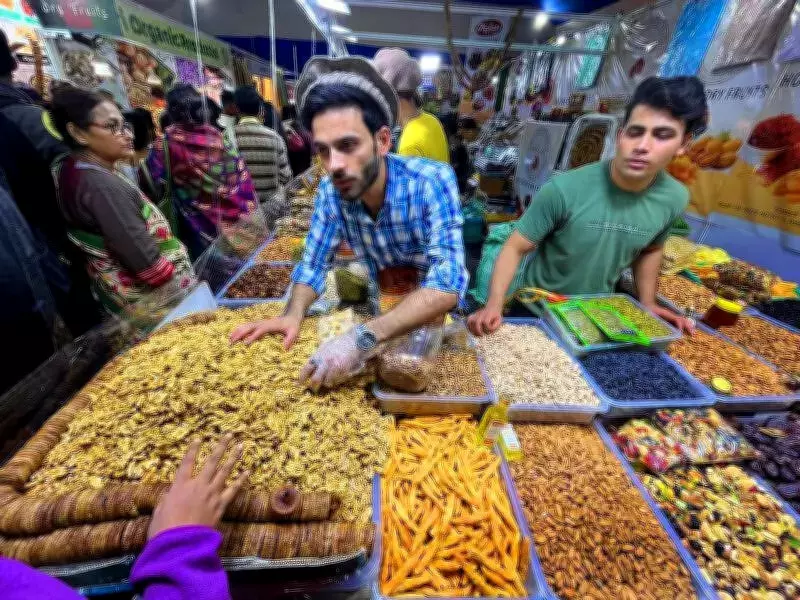
Varun Nevatia, vice-president of the Federation of Kirana and Dry Fruit Commercial Association, highlighted that trade with Afghanistan was already hampered after Pakistan denied transit access to Afghan trucks during Operation Sindoor. The situation has worsened with regional tensions and Iranian strikes affecting Dubai's logistics, further disrupting supply chains.
Industry estimates reveal that Amritsar historically handled 35–40% of India's imported dry fruit trade via the Afghanistan route, with annual volumes ranging between Rs 8,000 and Rs 10,000 crore. However, trade through this corridor has declined by over 50–60%, forcing importers to shift to alternative routes at significantly higher costs. As a result, prices for dry fruits sourced from these regions have already surged by more than 20%.
Future Outlook: Potential for Further Price Escalation
Nevatia cautioned that if these war-like conditions persist, the market could face a sharp escalation in prices, placing additional pressure on both traders and consumers. The ongoing disruptions underscore the vulnerability of regional trade networks to geopolitical instabilities, with Amritsar's economy particularly affected by the ripple effects of conflicts in the Middle East and South Asia.






