

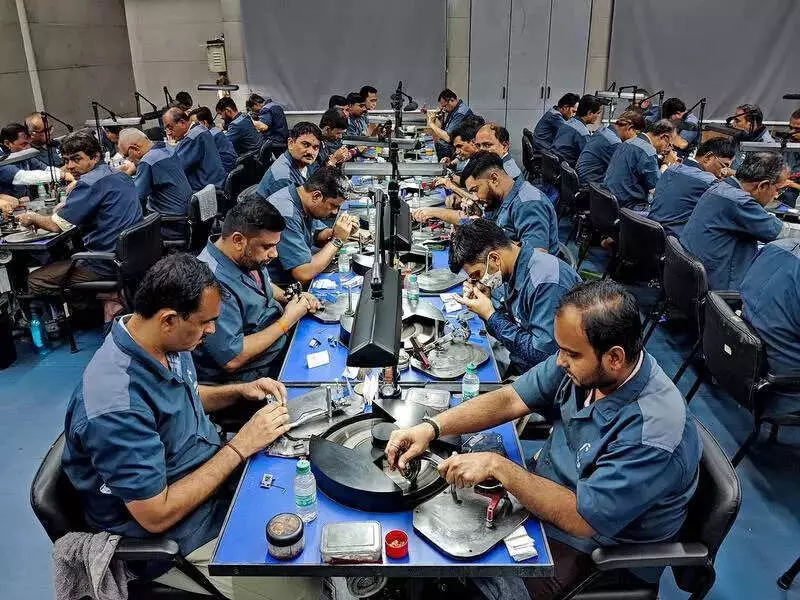
The natural diamond cutting and polishing industry in India, centred in Surat, is navigating a severe downturn. A triple threat of slowing demand in key markets like the US and China, fierce competition from cheaper lab-grown diamonds, and a punishing 50% US tariff on polished diamond imports has squeezed the sector. However, a recent policy shift in Belgium has sparked a glimmer of hope for manufacturers seeking a strategic workaround.
A Strategic Shift to Antwerp
In a significant move, the Flemish government of Belgium has decided to ease work permits for foreign diamond polishers and sorters, classifying them as "shortage occupations." This streamlined procedure, effective from January 1, 2026, is seen as an attempt to revitalize Antwerp's status as a global diamond hub, much of which has shifted to Dubai in recent years. For Indian manufacturers, the appeal lies in the European Union's 0% tariff access to the crucial US market.
"Like Botswana, Indian manufacturers can get the initial and final cutting or polishing done there after work here. This will enable manufacturers to take advantage of the 0% tariff," explained an industry expert from Mumbai. Karen Rentmeesters, CEO of the Antwerp World Diamond Centre (AWDC), emphasized the necessity of the move, stating, "To remain competitive as a diamond trading centre, our companies must be able to hire polishers and sorters from outside Europe quickly and easily."

Reversing a Dramatic Decline
The potential resurgence in Antwerp-based processing would mark a reversal of fortune. An industry insider revealed that the number of diamond workers in Antwerp has plummeted from 28,000 to less than 1,000. Meanwhile, Dubai has firmly taken the crown as the world's leading diamond trade hub. In 2024, Dubai exported 85 million carats of rough diamonds worth $9.8 billion, more than double Antwerp's 39 million carats valued at $4 billion. This is a complete flip from 2018, when Antwerp dominated with 122 million carats ($12 billion) compared to Dubai's 75 million carats ($9 billion).
High operational costs, wages, and complex regulations in Antwerp had previously driven business away. "India has the best skilled and cheapest workforce in diamond cutting and polishing. The robust polishing infrastructure is also an advantage," noted a manufacturer, highlighting why most processing moved to India.
Industry Leaders Welcome the Move
Key players in the trade have welcomed Belgium's decision. Raju Patel, an Antwerp-based diamond trader, said, "The announcement on hiring of foreign workers is a good move to boost the trade in Antwerp. Leading diamond companies already have offices and workplaces here, and this will encourage them." An Antwerp-based leading diamond businessman added that companies with existing manufacturing facilities in the city can now look to expand them.
Most major Indian and Surat-based diamond manufacturers maintain offices and some polishing capacity in Antwerp, though operations have drastically reduced. The new permit regime aims to address the structural shortage of specialized workers in Belgium, which the AWDC calls essential for keeping Antwerp competitive. For the Indian diamond industry, this European gateway may now provide a critical path to reclaiming profitability in an increasingly challenging global market.






