

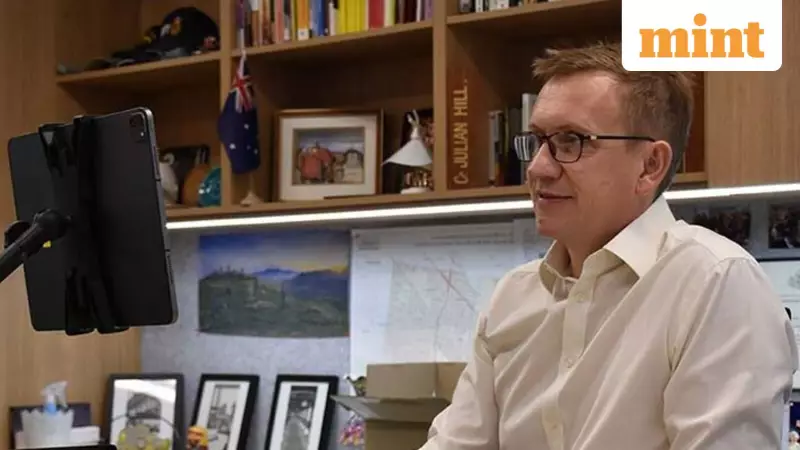
Massive Australian reserves of critical minerals have emerged as a central pillar in the rapidly expanding partnership with India, alongside tourism, education, and agribusiness. This multi-pathway cooperation was highlighted by Australia’s Assistant Minister Julian Hill during the India-Australia Business Summit 2025 in New Delhi.
Critical Minerals: The Clean Energy Superhighway
Speaking on Thursday, Hill, who holds portfolios for international education, citizenship, customs, and multicultural affairs, stated that Australia's lithium, copper, nickel, and cobalt are directly supporting India's ambitious manufacturing plans. He referenced a new roadmap for bilateral ties launched earlier this year by Australian Prime Minister Anthony Albanese, which identifies four key "superhighways" for cooperation.
"One, clean energy. That's Australian critical minerals helping to power India's manufacturing ambitions in renewables," Hill explained. "Australia produces over half the world's lithium and we have the world's second largest reserves of nickel, copper and cobalt." This aligns with India's strategic goal to scale up manufacturing in sectors like renewable energy and clean mobility.

Building Resilient Supply Chains Amid Global Challenges
The collaboration on critical minerals gained formal structure in July, when India and Australia, as members of the Quad alliance with the US and Japan, launched the Quad Critical Minerals Initiative. This pledge to secure and diversify supply chains comes against the backdrop of China's dominance in rare earth magnets, exports of which were halted in April, causing global concern.
These magnets are vital for defence, electronics, renewable energy, and electric vehicles. In response, India's government has approved a ₹7,280 crore plan to incentivise five domestic rare earth magnet-making facilities, aiming to build a resilient supply chain less dependent on external shocks.
Trade Doubles, But Potential Remains Vast
Hill noted that bilateral trade between India and Australia has doubled in the last five years, significantly boosted by the 2022 Economic Co-operation and Trade Agreement (ECTA). Indian exports to Australia have seen substantial growth in agriculture (35%), automotive (100%), and apparel (20%).
"On the Australian side, we're pleased to have seen big increases in the export of ore and mineral shipments to India," he said. However, Hill cautioned against complacency, pointing out that trade with India is still less than 20% of Australia's trade with China. "...we can't be complacent, because there is a lot more that we can and should do to fulfil our potential," he urged.
To unlock further opportunities, the two nations are now negotiating to upgrade ECTA into a Comprehensive Economic Cooperation Agreement. Highlighting the deep people-to-people ties, Hill also remarked that the most common surname among all registered cricket players in Australia is 'Singh', underscoring the multicultural fabric connecting the two democracies.






