

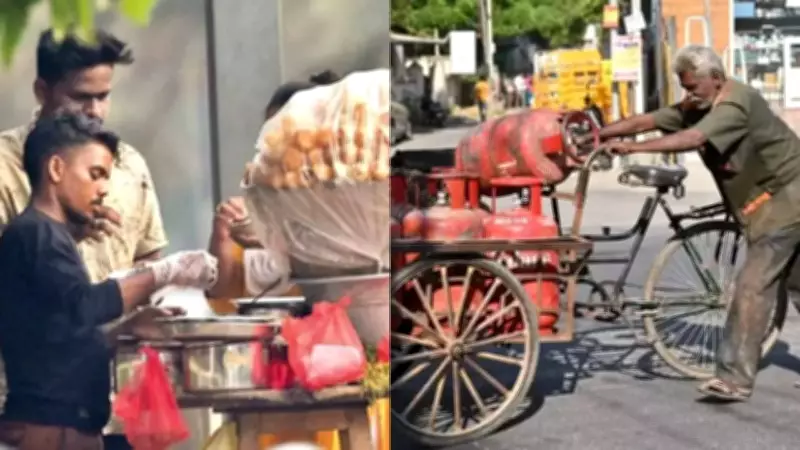
Bhopal's Street Food Culture Faces Severe Strain Amid Gas Cylinder Shortage
The vibrant street food scene in Bhopal is experiencing significant disruption as a critical shortage of commercial gas cylinders continues to impact pani puri stalls and similar snack vendors across the city. This familiar element of late-night dining and family outings has seen a sharp decline, with vendors reporting substantial business losses and operational challenges.
Widespread Impact on Vendors and Markets
Across busy roads and popular market areas, pani puri stalls have either closed down or significantly reduced their operating hours. Vendors estimate that approximately 40% of their business has been affected, with many forced to cut losses or cease operations entirely. The shortage has particularly impacted major Bhopal markets including Kolar, Jawahar Chowk, and the BHEL area, where numerous food carts remain closed or operate only during limited evening hours.
Root Causes and Supply Chain Disruption
The commercial gas cylinder shortage is directly linked to broader supply chain disruptions resulting from intensifying global conflicts. Local distributors in Bhopal report that their reserves were exhausted within a short period, leaving small food vendors with limited options. Many have been compelled to scale back operations or stop completely due to the unavailability of essential cooking fuel.

Personal Stories of Struggle
Pukhraj, a pani puri seller from Jawahar Chowk with two decades of experience, reveals he can no longer secure enough fuel to fry pani puri for even a single batch. Other vendors, already weakened by the commercial cylinder shortage, have parked their carts and sought temporary employment elsewhere. Some have resorted to purchasing black-market cylinders at prices several times higher than normal rates.
Ratiram, a major wholesale supplier of pani puri to retailers, confirms the severity of the situation: "I have informed retailers that I cannot continue supplying at previous levels. Due to the commercial LPG shortage, I have reduced pani puri production by 40%."
Consumer Impact and Economic Consequences
Consumers are feeling the effects of this crisis through both reduced availability and increased prices. In some areas, pani puri prices have risen from Rs 10 to Rs 15-20 per plate. For students and daily wage earners, what was once an affordable snack is becoming increasingly difficult to justify purchasing.
Vendors report that customer numbers have dropped sharply, exacerbating pressure on already fragile incomes. Babulal, who operates near Lily Square, warns that if the situation persists, many families dependent on street vending may lose their only source of livelihood.
Broader Implications for Street Food Economy
The crisis extends beyond individual vendors to affect the entire street food ecosystem in Bhopal. The shortage highlights how global supply chain disruptions can have immediate, tangible effects on local economies and cultural traditions. As vendors struggle to maintain operations, the city's culinary identity faces unprecedented challenges that could have lasting consequences for both food culture and economic stability in affected communities.






