

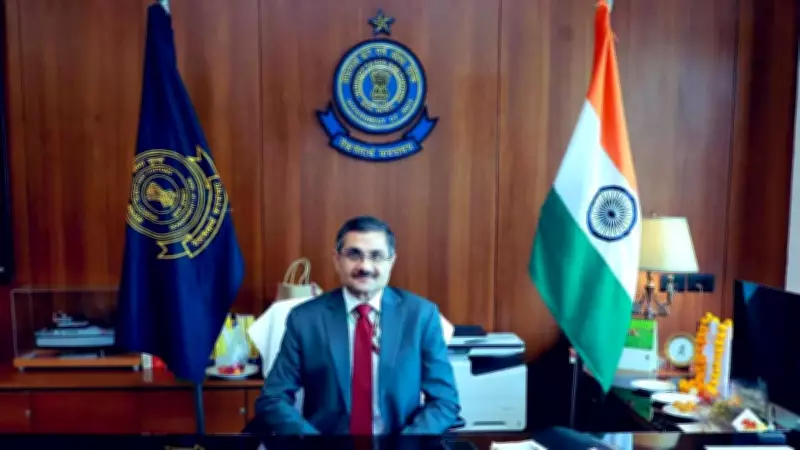
CBIC Chairman Stresses Strategic Intent Behind Customs Duty Cuts
In a recent interview, Vivek Chaturvedi, Chairman of the Central Board of Indirect Taxes and Customs (CBIC), emphasized that the series of customs duty reductions and exemptions announced in the Union Budget should not be interpreted solely through the lens of revenue implications. Instead, these measures are designed to bolster India's manufacturing industry, making it more resilient and competitive on the global stage.
Calibrated Approach to Boost Key Sectors
Chaturvedi highlighted that the duty cuts are part of a sector-specific strategy, carefully calibrated to address the needs of various industries. This nuanced approach aims to prepare domestic manufacturers for the upcoming free trade agreements (FTAs) with countries like the UK, Oman, and New Zealand, as well as anticipated deals with the European Union and the United States.
Key sectors benefiting from these exemptions include:- Nuclear Energy: Duty exemptions for setting up nuclear power plants without capacity limits.
- Critical Minerals: Concessions for materials like monazite, essential for electric vehicle magnets, and sodium antimonate, which reduces solar glass panel costs.
- MSMEs: Protection for domestic umbrella manufacturers with a composite duty, and duty exemptions for leather exporters and the seafood processing industry.
Addressing Global Trade Dynamics and SEZ Challenges
When questioned about the influence of global trade upheavals, particularly from the US, on the duty cuts, Chaturvedi clarified that the measures are not a reaction to external pressures. Rather, they are intended to support industries ranging from energy and defence to small businesses. He framed the concessions as essential for enabling Indian manufacturers to compete not only domestically but also in international markets.

With over 460 special economic zones (SEZs) shutting down in the past five years due to prior US tariffs, the Budget introduced a one-time measure allowing SEZs to sell to the domestic market at concessional duties. Chaturvedi explained, "Idling capacity is not good for the economy. Once you start using that capacity, you need a market, and if primary export markets are unavailable, the alternative is the Domestic Tariff Area (DTA)." He assured that safeguards will be implemented to prevent disadvantage to existing DTA manufacturers.
Revisions in Tobacco Taxation and Baggage Rules
Chaturvedi also defended the recent increase in duties on cigarettes, the first since 2017, citing global health guidelines from the World Health Organisation (WHO). He noted that many countries, including Australia and the UK, impose duties of 80-85% on cigarettes, with automatic escalation mechanisms tied to inflation. The move aligns with the WHO's affordability index, aiming to reduce cigarette consumption as incomes rise.
Additionally, the CBIC Chairman discussed the overhaul of baggage rules, which raise the duty-free limit for passengers to Rs 75,000. This change, effective from Monday, includes a shift to a weight-based system for jewellery valuation and provisions for professionals carrying high-end equipment. Chaturvedi described these updates as "long overdue" and focused on easing irritants for travelers, including extending transfer-of-residence benefits to foreigners with long-term Indian visas.
Overall, Chaturvedi's insights underscore a strategic vision behind the Budget's duty cuts, prioritizing industrial growth and competitiveness over short-term revenue gains, while also addressing broader economic and health considerations.






