

China Rejects Indian Rice Consignments Over GMO Concerns, Sparking Export Fears
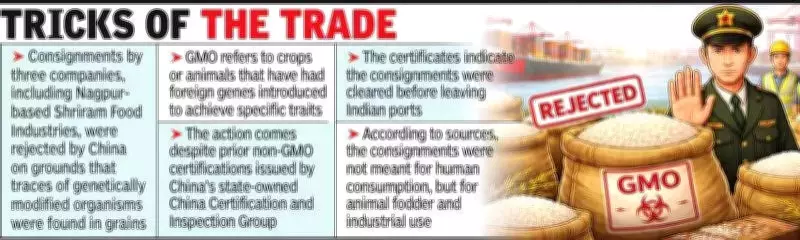
In a significant trade development, China has rejected multiple rice shipments from three Indian companies, including Nagpur-based Shriram Food Industries, on grounds that traces of genetically modified organisms (GMO) were detected in the grains. This unexpected rejection has raised serious concerns about potential cascading effects on India's substantial rice export market to China and beyond.
Certification Contradiction and Immediate Impact
The rejection presents a puzzling contradiction, as the affected consignments had previously received non-GMO certifications from China's own state-owned China Certification and Inspection Group (CCIC), which maintains an operational office in India. Copies of these clearance certificates, reviewed by media sources, confirm the shipments were officially approved before departing Indian ports. According to industry sources, the rejected rice was specifically intended for animal fodder and industrial applications, not for direct human consumption.
The other two companies impacted by China's decision are based in Delhi and Raipur. All three firms are now urgently seeking clarification from Indian agricultural authorities, including the Indian Council of Agricultural Research (ICAR). Some trade analysts suggest this move might represent a strategic element within broader trade negotiations between the two nations.

Substantial Trade Volume at Stake
The economic stakes are considerable. China annually requires approximately 16 million tonnes of rice, with India supplying about 3 million tonnes of this total, establishing itself as a major player in the global rice market. Other significant exporters to China include Vietnam, Thailand, and Pakistan. Notably, trade sources indicate that the stringent non-GMO certification requirement appears to be selectively enforced against Indian consignments, raising questions about equitable trade practices.
The rejected shipments consisted of non-basmati broken rice, which enjoys substantial demand in the Chinese market. Interestingly, China maintained a ban on Indian non-basmati rice imports until 2016, when diplomatic efforts successfully opened this valuable trade channel, leading to significant commercial exchange.
Broader Implications for Global Exports
The ramifications extend far beyond China. Industry experts warn that China's GMO allegations could negatively influence India's rice exports to other crucial markets, including numerous African nations, Russia, and the United States. The "GMO tag" assigned by Chinese authorities might create unwarranted skepticism among other importing countries, potentially disrupting established trade relationships and contracts.
India's Regulatory Framework on Genetic Modification
Within India, the cultivation of genetically modified crops requires explicit approval from the Genetic Engineering Appraisal Committee (GEAC). To date, only Bt Cotton—genetically modified for bollworm resistance—has received legal authorization for commercial cultivation. GMO technology involves introducing foreign genes into organisms to achieve specific traits, such as pest resistance or increased yield.
Indian agricultural scientists have also developed DRR Dan and Pusa DST, two innovative varieties of genome-edited rice designed for higher yields and approximately 20% lower methane emissions. Indian authorities consistently distinguish genome editing from genetic engineering, clarifying that the former modifies existing DNA sequences while the latter incorporates foreign genetic material.
As the affected companies await official responses and clarifications, the Indian rice export industry faces a period of uncertainty. The outcome of this dispute could reshape trade dynamics, influence international perceptions of Indian agricultural products, and determine the future of a multi-million-dollar export relationship critical to both nations' economies.






