

China Slams US Over New Trade Investigations, Calls Them 'Political Manipulation'
China has issued a firm rebuke to the United States following the launch of new trade investigations last week, with Beijing's commerce ministry urging Washington to "correct its erroneous ways." The diplomatic pushback comes as trade negotiators from both nations convened in Paris for critical discussions aimed at resolving escalating tensions.
China Lodges Formal Representations Against US Probes
Chinese officials confirmed they have formally "lodged representations" with the United States government regarding the latest investigations. The commerce ministry released a statement calling on Washington to "meet China halfway" and resolve issues through constructive dialogue rather than unilateral actions.
The ministry characterized the US moves as "extremely unilateral, arbitrary and discriminatory," accusing American authorities of "attempting to construct trade barriers" through these investigations.

Details of US Trade Investigations
The United States announced two separate trade investigations targeting multiple economies including China. The first probe, announced last week, examines alleged "failures to take action on forced labor" across 60 economies and whether such practices burden or restrict American commerce.
A second investigation focusing on excess industrial capacity was launched just one day earlier, targeting 16 trading partners including China. Beijing's foreign ministry immediately criticized this move as "political manipulation," suggesting the investigations serve political rather than legitimate trade purposes.
Paris Trade Talks Amid Escalating Tensions
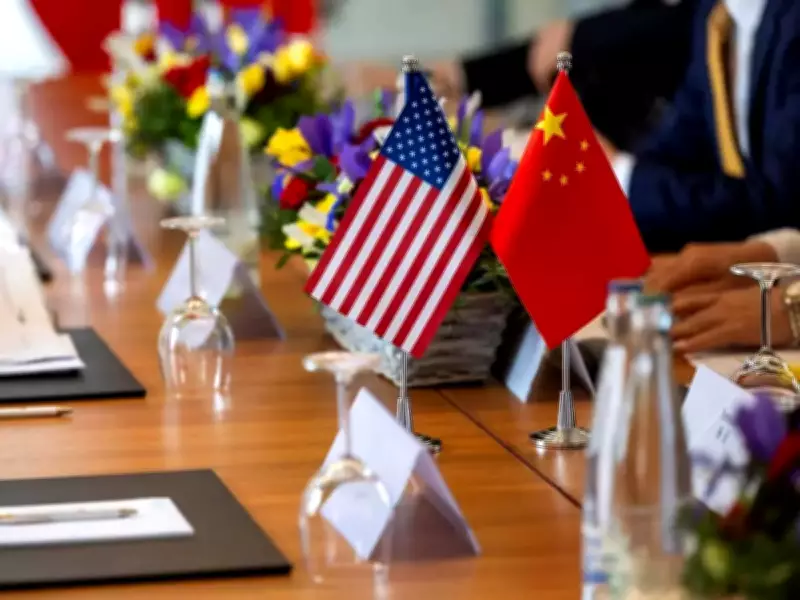
Trade representatives from China and the United States met in Paris on Sunday, with discussions expected to continue for two days. These talks occur against a backdrop of increasing trade friction, with the new investigations potentially complicating negotiation efforts.
The investigations are expected to take several months to conclude, and their findings could potentially support the introduction of new tariffs. This development follows the US Supreme Court's February decision that struck down sweeping tariffs previously imposed by President Donald Trump.
Forced Labor Allegations and Regional Concerns
Concerns around forced labor practices in China's western Xinjiang region have been repeatedly raised by human rights organizations and United Nations experts. These groups have particularly highlighted alleged exploitation of minority communities in the region.
Beijing has consistently rejected these allegations, labeling them as "fabricated" and denying any systematic forced labor practices. The Chinese government maintains that labor conditions in Xinjiang comply with international standards and domestic laws.
Potential Trump Visit and Broader Context
Meanwhile, Washington has indicated that former President Donald Trump plans to visit China between March 31 and April 2, though Beijing has yet to confirm these proposed dates. Trump told the Financial Times that the planned summit might be delayed due to ongoing conflicts in the Middle East.
The trade investigations and diplomatic exchanges occur within a complex global context, with multiple geopolitical factors influencing US-China relations. Both nations continue to navigate economic competition while attempting to maintain functional diplomatic channels.
As the investigations proceed and trade talks continue, observers will be watching closely for any developments that might signal either escalation or de-escalation in the ongoing trade tensions between the world's two largest economies.






