Major Technical Snag Paralyzes Delhi Airport Operations
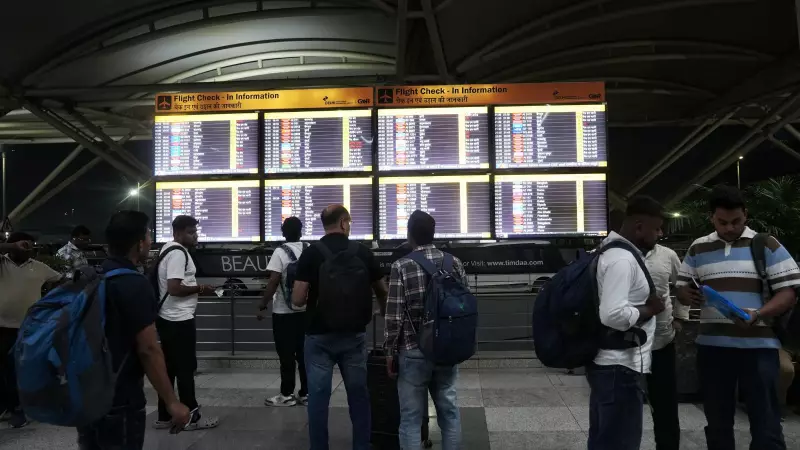
Chaos erupted at Delhi's Indira Gandhi International Airport (IGIA) on Friday as a persistent technical malfunction in the air traffic control system caused massive flight disruptions for the second consecutive day. The situation led to extensive delays affecting at least 600 flights throughout the day, creating long queues and frustrated travelers across Terminal 3.
The Airports Authority of India (AAI) confirmed that the technical issue was eventually resolved by 9 PM after plaguing operations for the majority of Friday. The problem originated in the Automatic Message Switching System (AMSS), a critical component that supports Air Traffic Control data operations.
Airlines Scramble to Manage Passenger Fallout
As the technical snag persisted, major airlines issued urgent advisories to passengers. Indigo, India's largest carrier, explicitly urged travelers to check their flight status before heading to the airport and to allocate additional time for travel formalities.

Air India and Air India Express both reported that their ground staff and cabin crews were providing immediate assistance to minimize passenger inconvenience. Despite these efforts, social media platforms flooded with complaints from distressed travelers facing significant disruptions to their travel plans.
One passenger from Nagpur described an extremely frustrating experience: "My Indigo flight from Nagpur to Delhi was first delayed from 1.40 pm to 5 pm. Then, when all passengers were boarded, the crew realized they had to change pilots as per norms."
Emergency Measures and System Restoration
The AAI revealed that the technical issue was initially detected on Thursday, though Thursday's disruption remained minimal. Following the detection, the Secretary of the Ministry of Civil Aviation conducted an emergency review meeting with AAI Chairman and other officials to address the escalating situation.
Immediate countermeasures included engaging the Original Equipment Manufacturer and deploying additional staff to manually process flight plans for the Air Traffic Control system. This manual intervention ensured that air traffic operations continued safely, though at a significantly reduced pace.
"A team of Electronics Corporation of India Limited officials and AAI personnel is still on site. The AMSS systems are up and functional now," the AAI stated in their official announcement.
An aviation official explained the operational impact: "AMSS is basically a signalling software that sends signals to flights for landing and taking off. While the arrival system functioned properly, the departure signalling required manual processing, increasing typical processing times by three to four times."
The disruption wasn't confined to Delhi alone, with similar issues reported at other major Indian airports including Mumbai's Chhatrapati Shivaji Maharaj International Airport. However, aviation experts and airport sources quickly dismissed speculation about a potential cyberattack, confirming the incident resulted from a technical malfunction rather than malicious activity.