

Global Energy Crisis Disrupts Rural Water Supply Projects in India
The ripple effects of the ongoing US-Iran conflict are now being felt deep within India's rural heartlands, critically impacting essential water supply infrastructure projects. The Jal Jeevan Mission (JJM), a flagship government initiative aimed at providing tap water to every rural household, is facing significant delays due to a severe shortage and price surge of High-Density Polyethylene (HDPE) pipelines.
Supply Chain Disruption and Soaring Costs
HDPE, a petroleum derivative essential for building the arterial network that delivers water to the last mile, has become a major bottleneck. Market sources report that HDPE rates have skyrocketed from approximately Rs 1.03 lakh per metric tonne in February to a staggering Rs 1.62 lakh per metric tonne—a jump exceeding 50%. This dramatic increase is a direct consequence of rising global crude oil prices following the geopolitical tensions.
"The rates have gone beyond reasonable levels," confirmed Arun Lakhani, Chairman of Vishwaraj Group, a company executing JJM contracts in states like Uttar Pradesh, Maharashtra, and Karnataka. "But HDPE supply constraints are having a bigger impact on the contracts than just the price."

Contractual Challenges and Force Majeure
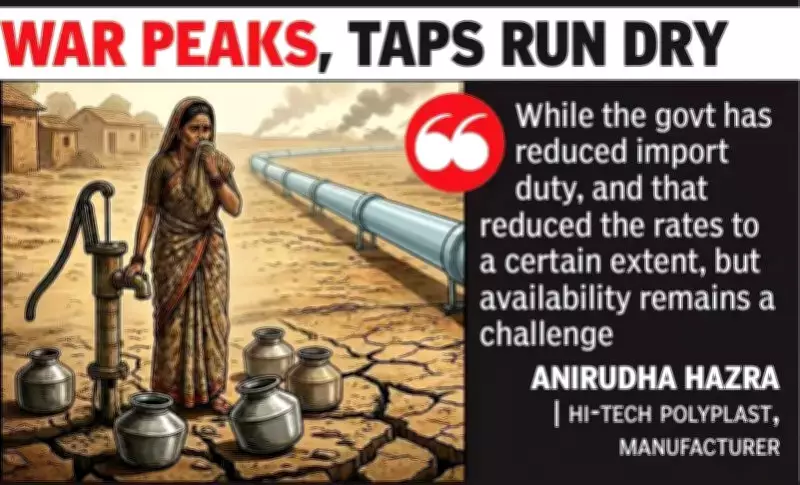
The price escalation has far exceeded the standard escalation clauses built into government contracts, which are designed to cover regular, incremental price rises based on broader commodity indices. Anirudh Hazra of Hi-Tech Polyplast explained the predicament: "The sharp increase in HDPE prices is much beyond what is covered under the clause. While a reduction in import duty has provided minor relief on pricing, availability remains the primary challenge."
This mismatch has left contractors in a difficult position, with many considering invoking the force majeure clause—a contractual provision that shields parties from liabilities due to unforeseen, uncontrollable events. The dual blow of supply constraints and prohibitive costs has visibly slowed the pace of awarding and executing new JJM contracts.
Compounding Delays in Water Infrastructure
The HDPE crisis compounds existing challenges for the Jal Jeevan Mission. Sources indicate that JJM works had already been hampered by slowing payment cycles in several states, affecting project timelines. The current pipeline shortage threatens to exacerbate these delays further.
The impact extends beyond just pipelines. Vishal Agrawal of RC Plasto Tanks and Pipes highlighted the broader effect on the water storage industry: "Ultimately, tanks are needed to store water. The demand goes up during the summer season, apart from the requirement for government contracts. The shortage and price hike have affected our industry significantly."
Manufacturers are caught in a squeeze, facing both a shortage of raw materials and the steep price hike, which in turn disrupts the supply chain to contractors on the ground. This situation underscores how global geopolitical events can directly impede critical national development missions aimed at improving rural livelihoods and public health through reliable water access.






