

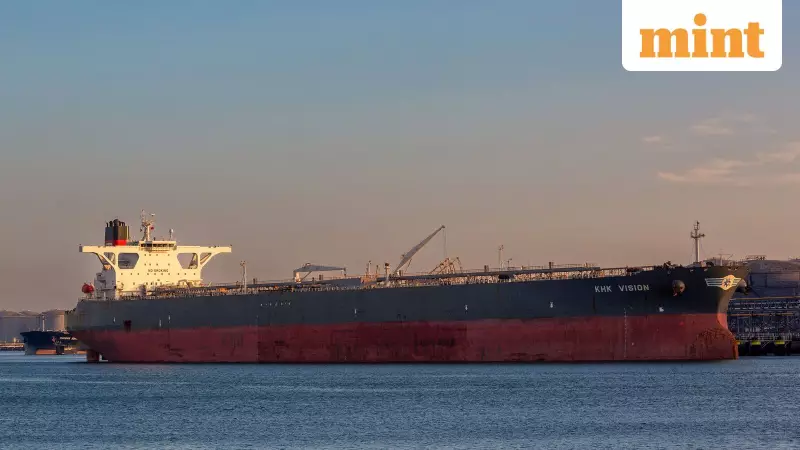
The European Union rolled out a fresh set of sanctions on Monday, directly aiming at individuals and companies it says are helping Russia sell its oil and fund the war in Ukraine. This 19th package of measures specifically names oil traders, including Murtaza Lakhani and Etibar Eyyub, for their roles in circumventing Western restrictions on Russian crude exports.
Targeting the Shadow Fleet and Key Traders
Despite 19 rounds of sanctions, Russia has adapted, continuing to sell millions of barrels of oil at discounted prices to major buyers like India and China. A significant part of this trade relies on a "shadow fleet" of vessels that operates outside the mainstream Western maritime industry, avoiding standard insurance and shipping services.
The latest EU sanctions forbid citizens and businesses within the bloc from engaging with the listed entities. This action is designed to cut off their access to crucial European shipping and insurance providers. The EU has now listed over 2,600 individuals and companies in total since the conflict began.

This week, the EU is expected to list more than 40 additional ships as part of Russia's shadow fleet, bringing the total number of designated vessels to roughly 600. The new sanctions also target nine people and entities supporting this clandestine oil tanker network, including businessmen linked to Russian state giants Rosneft and Lukoil.
Profiles of the Sanctioned Oil Traders
Among those highlighted is Canadian-Pakistani oil trader Murtaza Lakhani, the CEO of Mercantile & Maritime. The EU's Official Journal states that through his companies, he enables shipments of Russian oil, particularly from Rosneft, and controls vessels transporting Russian crude and petroleum products.
Lakhani, 63, began his career at Glencore and later played a key role in Kurdistan's oil sector. He leveraged those connections to help Rosneft secure oil and gas deals in the region, working closely with Rosneft CEO Igor Sechin. He later partnered with Vitol to invest in Rosneft's massive Arctic Vostok Oil project.
The EU also listed Etibar Eyyub, along with Anar Madatli and Talat Safarov, for their ties to the trading firm Coral Energy, which was renamed 2Rivers Group. Coral Energy had grown into a top Russian oil trader. Following UK and EU sanctions, the company claimed it halted Russian oil trading in 2023 and dissolved its business in August 2024.
Another individual sanctioned is Valery Kildiyarov, a director of Litasco Middle East DMCC, a trading subsidiary of the sanctioned Russian company Lukoil.
Russian Response and Global Market Impact
Russia's Permanent Mission to the EU dismissed the new sanctions as ineffective and self-harming for European citizens. In a statement carried by Russian news agencies, it criticized Brussels for repeating actions that fail, stating the strategy is fundamentally flawed and will worsen socio-economic problems in the EU.
The ongoing sanctions and Russia's adaptation through the shadow fleet continue to shape global oil markets. The availability of discounted Russian crude remains a significant factor for large importers like India, affecting global price dynamics and trade flows. The EU's move to continually expand its list targets the complex network that keeps this oil moving.






