

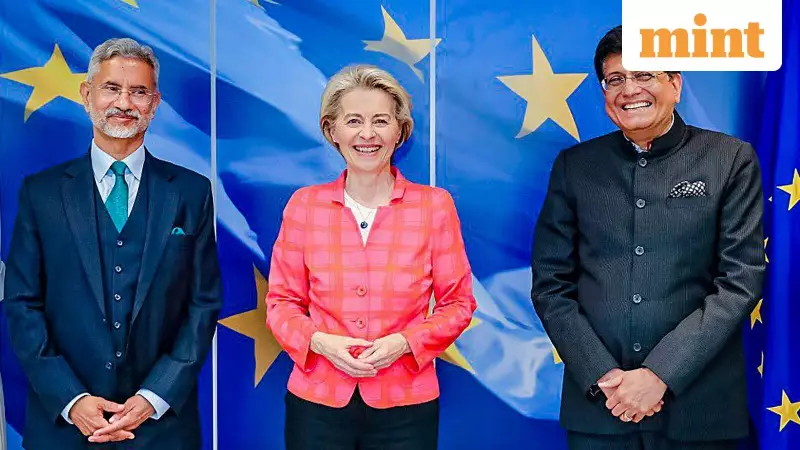
The Republic Day celebrations in New Delhi on January 26 will witness a significant diplomatic gesture, with top European Union leaders attending as chief guests. This move underscores a major push to finalise the long-awaited Free Trade Agreement (FTA) between India and the 27-nation bloc.
High-Level Diplomacy on Republic Day
According to a report, European Commission President Ursula von der Leyen and European Council President António Costa will be the distinguished chief guests at India's 2025 Republic Day parade. Their visit is strategically timed to coincide with the India–EU Summit, where the primary focus will be on breaking the deadlock in the FTA negotiations. Prime Minister Narendra Modi and President von der Leyen had previously agreed to work towards a February deadline to conclude the pact this year.
This high-profile engagement highlights a renewed and vigorous effort at the highest levels to strengthen strategic and economic ties between India and the European Union. The presence of both EU leaders is a powerful symbol of the partnership's importance.

Sticking Points and Negotiation Challenges
Despite the political push, significant hurdles remain on the technical front. As reported by Bloomberg on December 12, trade negotiators from both sides have grown less optimistic about finalising the agreement by year-end. Talks are currently stuck on a few critical issues, primarily concerning sensitive sectors.
The main sticking points involve automobiles and steel. The EU is urging India to increase the quota of cars—currently around 80,000—that can be exported to the Indian market at reduced tariffs. Conversely, India is seeking lower duties on specific steel products it exports to the EU and more flexibility concerning the bloc's Carbon Border Adjustment Mechanism (CBAM), a form of carbon tax.
European Commission spokesperson Olof Gill confirmed that EU Trade Commissioner Maros Sefcovic visited India earlier in December to advance the negotiations, following a phase of "intensive discussions" at the technical level.
A Deal Two Decades in the Making
The India-EU FTA has been under negotiation for nearly twenty years. Discussions, which resumed in June 2022 after an eight-year hiatus, cover a vast landscape of 23 policy areas or chapters. These include trade in goods and services, investment, intellectual property rights, and geographical indications.
The urgency to conclude the deal has been amplified by shifts in the global trade landscape, particularly after the return of Donald Trump to the White House. His administration's imposition of tariffs, including a 50% duty on Indian goods, has adversely impacted Indian exports, prompting New Delhi to actively diversify and secure alternative markets like the EU.
On the Indian side, Commerce and Industry Minister Piyush Goyal struck an optimistic note on December 10. He stated that negotiations are progressing and that a "rough outline of the free trade agreement has been prepared." Emphasising the commitment from both sides for an early conclusion, Goyal remarked, "I think the air is pregnant with possibilities."
The economic stakes are substantial. The EU is India's largest trading partner for goods, with bilateral trade reaching USD 136.53 billion in 2024-25. The EU market absorbs about 17% of India's total exports. A successful FTA would make key Indian exports like readymade garments, pharmaceuticals, and electrical machinery more competitive in Europe, while the EU seeks greater access for its automobiles, wines, spirits, and dairy products.
As the world watches, the Republic Day summit could be a pivotal moment in determining whether the two economic giants can finally translate two decades of talks into a concrete and historic trade agreement.






