The European Union's Carbon Border Adjustment Mechanism (CBAM) has moved from a trial phase to full enforcement, marking a pivotal moment for Indian industry. This policy imposes real carbon costs on imports like steel, aluminium, and cement, fundamentally altering trade dynamics for one of India's key export sectors.
The Sting of CBAM: A Sharp Export Decline
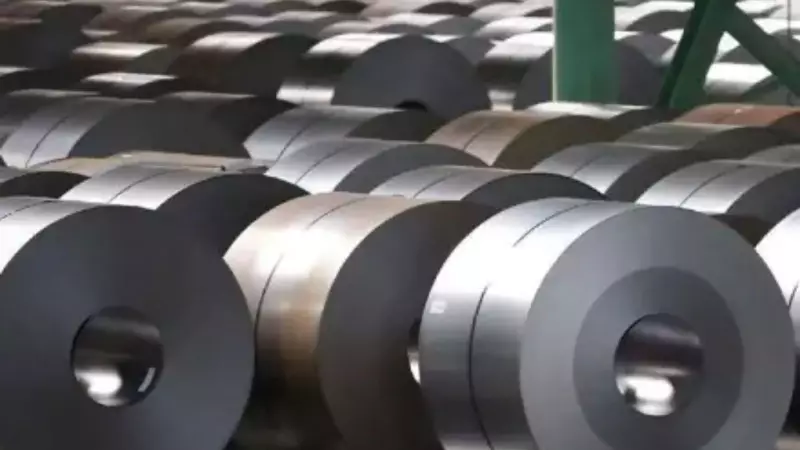
Indian steelmakers did not need an official invoice to feel the impact of CBAM. After a post-Covid surge where iron and steel exports to the EU more than doubled from $2.7 billion in FY21 to nearly $6 billion in FY22, the trend has sharply reversed. With the start of CBAM's reporting requirements, exports began to fall. By FY25, steel exports to the EU had dropped 30% compared to FY24. The definitive implementation in FY26 triggered a devastating 51% crash in iron and steel shipments to the bloc.
The financial burden is substantial. In a December 2025 auction, the EU's Emissions Trading System (ETS) price was set at €87.37 per tonne of CO2, significantly higher than historical levels of €20-30. Despite this cost, EU importers continue to buy Indian steel, valuing its inherent advantages in ore and labour costs, but only if the carbon footprint is accounted for.

India's Green Crossroads: Fight or Build?
The CBAM presents India with a clear strategic choice. The nation can spend the next decade contesting such climate tariffs at the World Trade Organization (WTO). Alternatively, it can proactively construct a domestic carbon pricing system that aligns with global standards. Building this architecture could transform a challenge into an opportunity, potentially making Indian steel the world's cleanest and most competitive.
Success hinges on decarbonising heavy industry, with green hydrogen at the core. The National Green Hydrogen Mission's target of 5 million metric tonnes per annum (MMTpa) by 2030 is critical for producing green steel via Direct Reduced Iron (DRI) technology. However, progress is lagging. By mid-2025, only 3 GW of electrolyser capacity had been awarded, a tiny fraction of the 60-100 GW ultimately needed.
Hurdles and the Path to Dominance
Several obstacles slow India's green hydrogen ambitions. The cost of producing green hydrogen in India remains three times higher than global benchmarks. Key projects, like the Sembcorp green ammonia hub in Tuticorin, face delays due to technology transfer issues and restrictive rules like those from the European Hydrogen Bank, which limit the use of cost-effective Chinese electrolysers. Currently, India imports most electrolysers from China, followed by Singapore, the UK, and Germany.
To accelerate, experts suggest liberalising imports not just of final green products but also the intermediate goods and essential inputs needed for their production. This is crucial as India's average applied tariff of 11.4% is nearly double the global average. Furthermore, building green steel plants is three times more expensive than conventional ones and requires massive renewable energy backup.
CBAM dramatically shortens the timeline for action. Indian exporters must immediately work to reduce and verify their emissions to avoid losing market share to competitors like South Korea, with its advanced hydrogen hubs, and Japan, with its strategic partnerships. India possesses the raw ingredients for success: abundant renewable energy potential, low-cost iron ore, and a clear 5 MMTpa ambition for green hydrogen.
The message is clear. CBAM is not a conclusion but a potential beginning. It could serve as the origin story for India's rise as a green industrial superpower, but only if the nation builds the future rather than fights the past.