

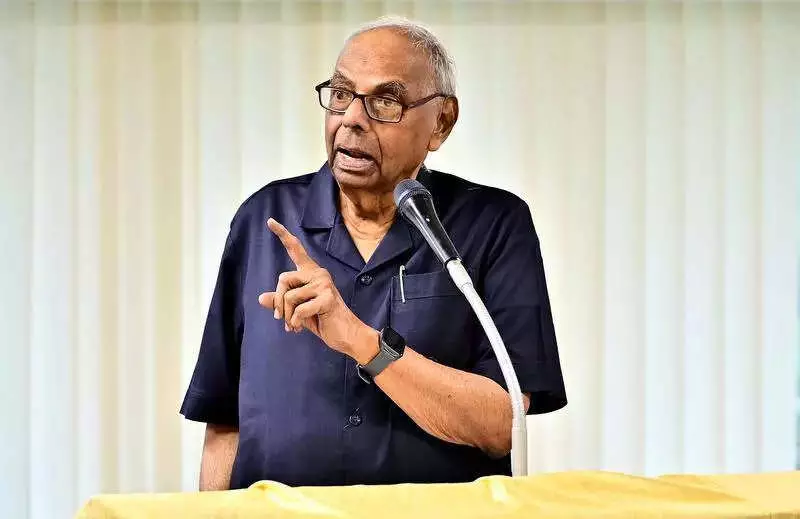
Former Reserve Bank of India Governor C Rangarajan has issued a strong call for India to seek a rapid resolution to the United States imposing steep 50% tariffs on select Indian exports. He suggested the move is driven more by geopolitical strategy than pure economics.
Geopolitics, Not Just Economics, Behind Tariffs
Speaking at the Madras Institute of Development Studies (MIDS) Founder's Day lecture in Chennai on Thursday, Rangarajan analyzed the 'Evolving contours of India's monetary policy'. He pointed out that the high tariff level of 50% singles out India among few nations. "It has something to do with the weaponization of tariffs or geopolitical considerations," he stated, urging a shift in focus. "We really need to shift our attention towards a quick resolution of our problems with the US," he emphasized, noting the underlying motives complicate a purely economic solution.
Long-Awaited Trade Pact and Capital Outflows
Rangarajan touched upon the protracted negotiations for a trade agreement between the two countries, expressing frustration over the delay. "I hear now and then that the pact between India and the US is nearing completion, but we just don't see it," he remarked. He explained that the core challenge remains the classic negotiation dilemma of "give and take, and what to give and what to take."

Linking the tariff issue to financial markets, the former governor connected it to the recent depreciation of the rupee, which fell to 91 against the US dollar. "What is happening now is capital outflows. Many institutional investors abroad are selling shares in India and repatriating the money," he observed, highlighting a direct economic consequence.
Monetary Policy and Inflation Targeting
During his lecture, Rangarajan also addressed the critical role of monetary policy in managing inflation. He asserted that the monetary authority holds a special responsibility to monitor, assess, and take appropriate action to control inflation. Advocating for the current framework, he said, "Flexible inflation targeting is a good balance between the twin objectives of growth and price stability." He explained this model safeguards against letting inflation exceed a certain threshold while ensuring economic growth is not unduly hampered.
The veteran economist's comments underscore the multifaceted challenges facing India's economic policymakers, where international trade disputes intersect with domestic monetary stability and investor sentiment.






