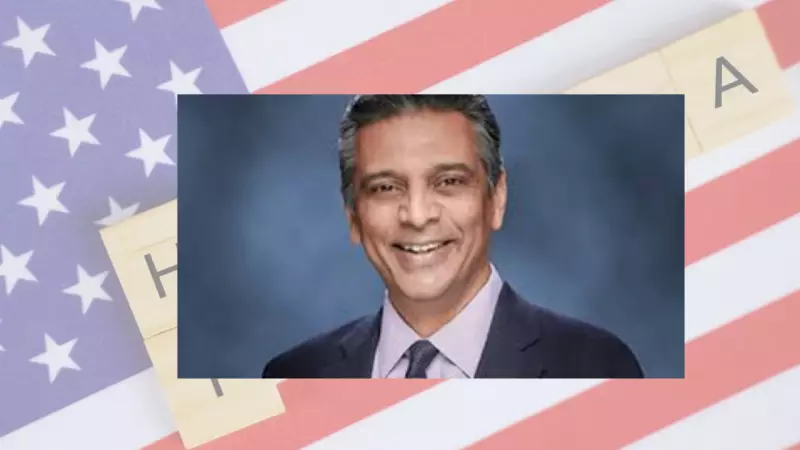
FedEx CEO Breaks Silence on Hiring Controversy
FedEx CEO Raj Subramaniam has finally spoken out. He addressed allegations that his company favors Indian candidates over American workers. These claims first surfaced in December 2025. Subramaniam firmly stated that FedEx operates as a meritocracy. He believes in providing opportunities for everyone based on their skills and qualifications.
The Allegations and Data
A report from Dallas Express triggered the controversy. It claimed FedEx received a massive federal contract worth $2.2 billion in 2022. Following this contract, the company reportedly hired hundreds of foreign workers using H-1B visas. Critics directly pointed fingers at Subramaniam. They noted a sharp increase in FedEx's use of the H-1B visa program after he became president and CEO in 2022.
Official records support this observation. H-1B visa approvals for FedEx jumped significantly. The number rose from just 37 approvals in 2021 to 102 approvals in 2025. This increase happened during a period when FedEx also conducted multiple rounds of layoffs. The timing raised questions about the company's hiring priorities.

Subramaniam's Defense and Philosophy
In a recent interview with The New York Times, Subramaniam shared his perspective. He expressed strong support for legal immigration. "I’m very much a believer in legal immigration, and that’s important," he stated. He reflected on his own experiences, calling his journey an American story. "I’m just grateful for the opportunities given to me. It’s very much an American story because I think it’s going to be rare for these kind of stories to happen in other countries. That’s one of the true, great strengths of America," Subramaniam explained.
He reiterated FedEx's commitment to fair hiring. "From a FedEx point of view, we are a meritocracy. We provide opportunities for everybody. I’m one of those examples, but I’m not the only one," he said. The CEO emphasized that his personal success story should not be seen as an exception but as proof of the system working.
FedEx's Official Stance and Numbers
FedEx Corporation provided specific data to counter the allegations. According to information from the U.S. Citizenship and Immigration Services H-1B Employer Data Hub, the company filed 436 H-1B petitions in fiscal year 2025. These were linked to its operations in Memphis, Tennessee. Out of these petitions, 434 received approval.
The company issued a statement clarifying its position. FedEx stated that team members on H-1B visas constitute less than 0.05% of its total U.S. workforce. The company also revealed that in 2025, it sought fewer than 100 H-1B visas for new hires. FedEx insisted these trends align with its regular employment patterns. The company firmly denied any connection between its layoffs and its H-1B hiring practices.
The Personal Journey of Raj Subramaniam
Raj Subramaniam, now 59 years old, is only the second CEO in FedEx's history. He has spent his entire career with the company, starting as a marketing analyst in the early 1990s. He recently shared poignant details about his immigration story from India to the United States.
"At that point in the late ’80s, it was a well-worn path because I went to the Indian Institute of Technology, which was the premier institution in India for undergrad. I was fortunate enough to get a scholarship to come to America. I still have the $2 bill that I came here with," Subramaniam recalled with evident emotion.
He described his middle-class upbringing in Trivandrum, a city in southern India. "My dad was a policeman. My mom was a doctor, so education was the ticket, basically," he said. This background shaped his belief in hard work and merit-based advancement. His story underscores the personal dimension behind the corporate policies now under scrutiny.
The controversy continues to spark debate about immigration, corporate hiring, and the American dream. Subramaniam's comments provide a human face to these complex issues.