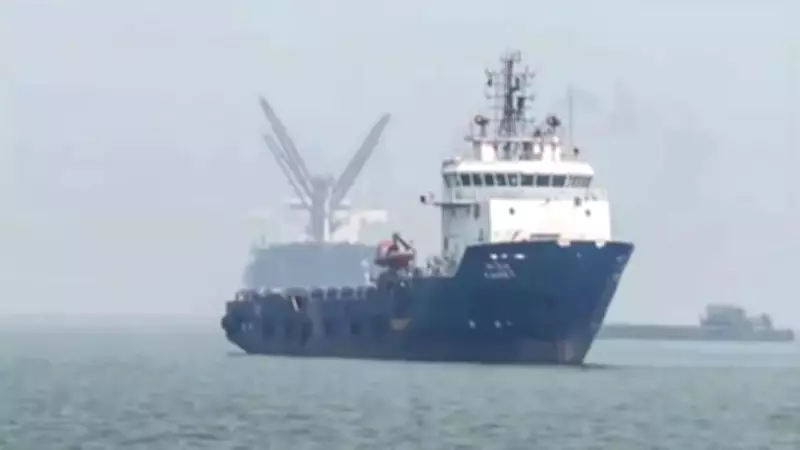
First Crude Oil Tanker Docks at Mumbai Port After Safe Passage Through Strait of Hormuz Amid Iran-US Tensions
In a significant development amid escalating regional conflicts, a Liberia-flagged crude oil tanker has successfully arrived at Mumbai Port after navigating the perilous Strait of Hormuz. The vessel, named Shenlong Suezmax, docked at the port on Wednesday, marking one of the first such arrivals since the onset of the Iran-US conflict.
Details of the Tanker's Arrival and Cargo
According to reports from news agency ANI, the Shenlong Suezmax reached Mumbai Port at 1 pm on Wednesday and was subsequently berthed at Jawahar Dweep by 6:06 pm. The tanker had loaded its cargo from Saudi Arabia's Ras Tanura port on March 1, departing two days later on March 3. It is carrying a substantial load of 1,35,335 metric tonnes of crude oil, which is slated for supply to refineries located in Mahul, eastern Mumbai. The discharge process for this crude is anticipated to take approximately 36 hours to complete.
The ownership and management of the vessel fall under Shenlong Shipping Ltd and Dynacom Tanker Management Ltd of Athens, respectively. Onboard, the ship has a crew of 29 members, comprising Indian, Pakistani, and Filipino nationals, with an Indian captain leading the team.

Navigational Tactics and Regional Security Concerns
Maritime tracking data revealed that the Shenlong Suezmax was observed in the Strait of Hormuz on March 8 before it temporarily disappeared from tracking systems. ANI reported that the vessel switched off its Automatic Identification System (AIS) transponder while traversing the high-risk stretch of the strait, a common tactic known as "going dark" to avoid potential targeting or tracking by hostile entities. The AIS transponder is a mandatory maritime VHF radio system that broadcasts critical information such as a ship's identity, position, speed, and course to prevent collisions and enhance navigation safety.
In a related development, Alireza Tangsiri, commander of the naval arm of Iran's Islamic Revolutionary Guard Corps, issued a stern warning regarding passage through the Strait of Hormuz. He stated that vessels must obtain Tehran's approval before sailing through the waterway, citing instances where two ships that ignored Iran's warnings were targeted on Wednesday. Tangsiri emphasized, "Any vessel intending to pass must obtain permission from Iran," highlighting the heightened restrictions imposed by Iranian authorities.
Broader Implications and Indian Maritime Operations
The Strait of Hormuz is recognized as one of the world's most critical maritime chokepoints, facilitating the daily transit of over 20 million barrels of crude oil. This volume accounts for about a fifth of global oil consumption and nearly a quarter of seaborne oil trade, underscoring the strategic importance of this narrow channel between Iran and Oman.
Meanwhile, the Indian Ministry of Ports, Shipping and Waterways has provided updates on the safety of Indian vessels in the region. Currently, 28 Indian-flagged vessels are operating in the Persian Gulf, with 24 vessels carrying 677 Indian seafarers positioned west of the Strait of Hormuz and four vessels with 101 Indian crew members located east of the strait. To monitor the evolving situation, a 24-hour control room has been operational since February 28 at the ministry and the Directorate General of Shipping, coordinating assistance as needed.
Authorities are actively collaborating with Indian embassies, ship managers, and recruitment agencies to ensure the safety and security of Indian seafarers amidst the ongoing tensions. This coordinated effort aims to mitigate risks and provide timely support in case of emergencies.
The arrival of the Shenlong Suezmax at Mumbai Port not only highlights the resilience of global shipping operations but also brings to the forefront the complex geopolitical dynamics affecting maritime trade in the region. As conflicts persist, such incidents serve as a reminder of the delicate balance between economic interests and security challenges in international waters.