

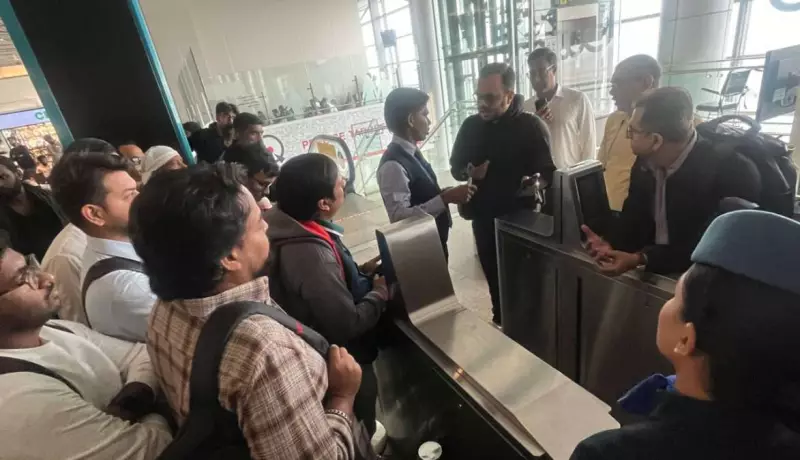
A widespread technical glitch in airline check-in systems caused significant disruptions and passenger chaos at airports across India on Tuesday, December 3, 2025. The failure led to long queues, frustrated travelers, and substantial flight delays, with the Rajiv Gandhi International Airport in Hyderabad witnessing particularly severe scenes.
System Failure Triggers Nationwide Airport Disruptions
The issue, described as a major technical failure affecting the common check-in systems used by multiple airlines, began in the morning hours. It severely hampered the ability of ground staff to process passengers, print boarding passes, and tag luggage. This resulted in a cascading effect, causing backups at security checkpoints and departure gates. While the exact technical nature of the flight check-in glitch was not immediately disclosed by authorities, its impact was felt at major aviation hubs including Delhi, Mumbai, Bengaluru, and Kolkata.
However, the situation at Hyderabad's airport escalated into visible airport delays and chaos. Passengers, unable to check in for their flights, formed massive crowds at airline counters. Social media was flooded with videos showing anxious travelers confronting airline staff, demanding answers and solutions. The scenes highlighted the heavy dependence on digital systems and the vulnerability of air travel to such technical snags.

Passenger Frustration Boils Over in Hyderabad
The Hyderabad airport chaos became the focal point of the day's events. With systems down for an extended period, frustration among flyers reached a boiling point. Many took to questioning airline representatives directly, as seen in widely circulated videos. Passengers reported missing their flights despite arriving hours early, while others were left in limbo about their travel plans.
"We were told the system is down across the country. There is no estimated time for resolution. No one is telling us what to do next," one stranded passenger was quoted as saying. The lack of clear communication from airlines during the initial hours of the crisis exacerbated the situation, turning confusion into anger for many.
Airport and airline staff worked manually where possible, but the process was slow and unable to handle the volume of passengers. The domino effect of the check-in failure meant that even flights that were technically ready to depart were held up waiting for passengers stuck in the endless queues.
Aftermath and Lessons for Indian Aviation
As engineers worked to resolve the airline technical issue, services were gradually restored later in the day. However, the disruption had already caused a massive ripple effect on flight schedules nationwide. The incident on December 3rd forced a critical look at the resilience of India's aviation infrastructure.
Key consequences and questions arising from the event include:
- Widespread Flight Delays: Hundreds of flights across multiple airlines were delayed, disrupting the travel plans of thousands of passengers.
- Financial and Reputational Cost: Airlines faced potential compensation claims and a hit to their reputation for operational reliability.
- Crisis Communication Failure: The event exposed gaps in proactive passenger communication during large-scale technical failures.
- Over-reliance on Centralized Systems: The glitch raised concerns about the risks associated with single points of failure in critical aviation processes.
This major passenger disruption serves as a stark reminder of the fragility of modern, interconnected travel systems. It underscores the urgent need for airlines and airports to develop more robust contingency plans, including effective manual backup protocols and transparent real-time communication channels, to manage such crises better in the future and maintain passenger trust.






