

Geopolitical Tensions Fuel Surge in Kraft Paper Prices, Squeezing Packaging-Dependent Industries
The ongoing geopolitical conflicts in West Asia, particularly involving Israel, Iran, and the United States, are creating significant ripple effects across global supply chains. These tensions are now directly impacting the kraft paper industry, leading to a sharp increase in prices that is cascading down to packaging costs for critical sectors such as Fast-Moving Consumer Goods (FMCG), pharmaceuticals, and food processing.
Supply Chain Disruption and Rising Input Costs
Industry representatives have highlighted that the conflict has severely disrupted global logistics, resulting in higher freight charges, uncertainty in shipping routes, and increased volatility in commodity markets. This disruption is particularly acute for paper mills that rely on imported raw materials.
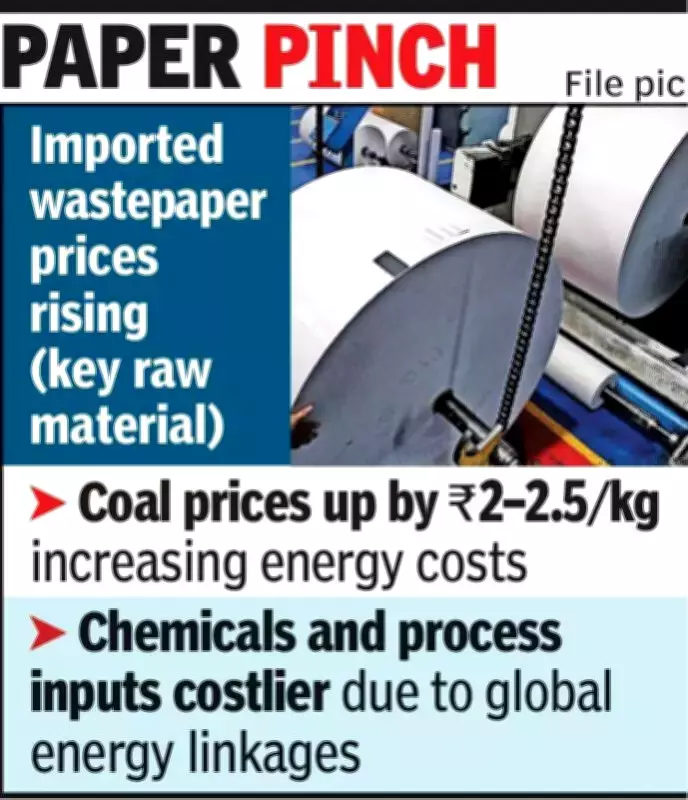
The paper industry depends heavily on imported wastepaper as a primary raw material. In recent weeks, prices for imported wastepaper have escalated due to these logistical challenges and heightened freight costs. Additionally, energy expenses are climbing, with market sources reporting that imported coal—widely used by paper mills for boilers and power generation—has seen price increases of approximately Rs 2 to Rs 2.5 per kilogram.

Direct Impact on Packaging Manufacturers
Paper mills manufacturing kraft paper and duplex board, which are essential for producing corrugated boxes and cartons, have already implemented price hikes of around Rs 3 to Rs 4 per kilogram in response to these rising input costs. Swadesh Sharma, President of the MP Corrugated Boxes Manufacturing Association, confirmed that this increase is directly affecting packaging manufacturers.
"Prices of corrugated boxes have risen by about Rs 3-4 per kg, leading to at least a 10 percent increase in overall costs," Sharma stated. "Furthermore, dispatches to customers are experiencing delays due to slower availability of raw materials from paper mills."
Chemical Costs and Production Pressures
Beyond raw materials and fuel, several chemicals and process inputs used in paper manufacturing have also become more expensive. This cost escalation is partly linked to rising global energy and petrochemical prices, which are further strained by the geopolitical situation.
Anupam Agrawal, a paper trader based in Indore, noted that mills are adopting a cautious approach in this volatile environment. "Many paper mills are hesitant to book long-term orders because raw material prices are changing rapidly," Agrawal explained. "Some mills have even temporarily closed bookings and are only accepting orders at revised prices."
Broader Implications for Key Sectors
The repercussions extend beyond the paper industry. Sectors that heavily depend on packaging—including FMCG, e-commerce, pharmaceuticals, and food processing—are already witnessing higher costs for cartons and packaging materials. This price surge threatens to increase operational expenses and potentially affect product pricing for end consumers.
As geopolitical tensions continue to influence global trade dynamics, stakeholders across these industries are closely monitoring the situation, anticipating further adjustments in supply chains and cost structures in the coming weeks.






