Germany's Chancellor Champions India-EU Free Trade Pact as Strategic Response to Rising Protectionism
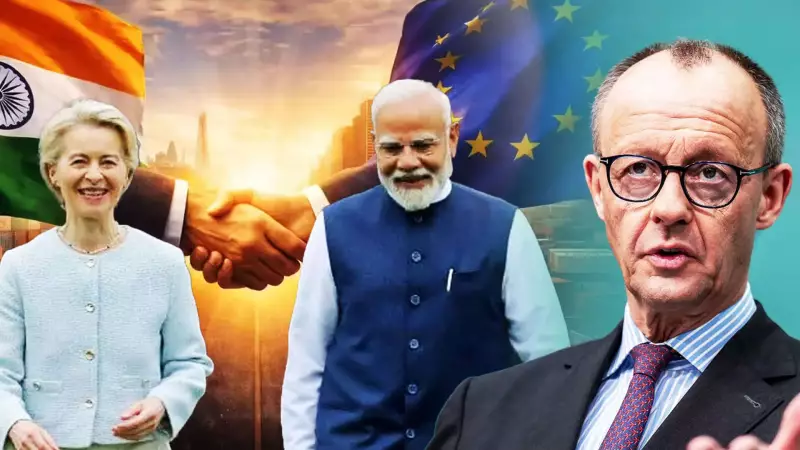
In a significant address at the World Economic Forum in Davos, German Chancellor Friedrich Merz has positioned the proposed India-European Union free trade agreement as a critical countermeasure against the growing tide of protectionism and isolationism in global politics. With tariff wars and trade barriers resurging on the international stage, Europe is actively recalibrating its economic approach, and Merz's remarks underscore a strategic pivot towards deeper engagement with India.
Merz Highlights India's Economic Momentum and Regulatory Stability
During his speech, Chancellor Merz emphasized India's robust growth trajectory and its stable regulatory environment as key factors driving Europe's interest in strengthening ties. He framed the free trade deal not merely as a bilateral accord but as a powerful response to the challenges posed by protectionist policies, such as those seen during the Trump era, which continue to unsettle global markets. Merz pointed out that India's dynamic economy offers a reliable partner for Europe in navigating these turbulent times.
Potential Impact and Upcoming India-EU Summit
The India-EU free trade agreement, which is anticipated to be formally announced at the forthcoming India-EU summit scheduled to take place in New Delhi, holds the promise of reshaping global trade flows. Currently, bilateral trade between India and the EU stands at an impressive USD 135 billion, and this pact is expected to catalyze a qualitative transformation in their economic relationship. By fostering enhanced cooperation, the agreement aims to place New Delhi at the heart of Europe's long-term economic strategy, reinforcing mutual benefits in areas such as technology, manufacturing, and services.

Key aspects of the deal include:
- Reduction or elimination of tariffs on a wide range of goods and services.
- Streamlined regulatory frameworks to facilitate smoother trade operations.
- Increased investment opportunities and joint ventures between Indian and European companies.
- Strengthened intellectual property rights and digital trade provisions.
Broader Context of Global Trade Dynamics
Merz's advocacy for free trade over isolationism comes at a pivotal moment when global economic policies are increasingly influenced by geopolitical tensions and nationalist agendas. The resurgence of Trump-era tariffs has created uncertainty in international markets, prompting nations like Germany to seek stable and growth-oriented partnerships. India, with its large consumer base and expanding industrial sector, presents a compelling alternative to more volatile trade relationships.
This strategic push aligns with broader European efforts to diversify trade dependencies and build resilient supply chains. By prioritizing the India-EU deal, Germany signals a commitment to fostering open markets and collaborative economic frameworks, which could serve as a model for other regions grappling with similar challenges.
In summary, Chancellor Merz's remarks at Davos highlight a forward-looking approach to international trade, where the India-EU free trade agreement is envisioned as a cornerstone of Europe's economic resilience and a bulwark against the forces of protectionism. As negotiations progress, stakeholders will be closely watching the outcomes of the upcoming summit, which could mark a new chapter in India-EU relations and influence global trade patterns for years to come.