

Government Approves One-Time Relief for SEZ Units with 30% Domestic Sales Cap
In a significant move to support Special Economic Zone (SEZ) units, the Indian government has introduced a one-time relief measure, allowing them to sell up to 30% of their turnover in the domestic tariff area, commonly known as the Indian market. This concession is available for the current financial year and involves paying concessional duty, providing a much-needed buffer against global trade disruptions.
Key Conditions and Sectoral Notifications
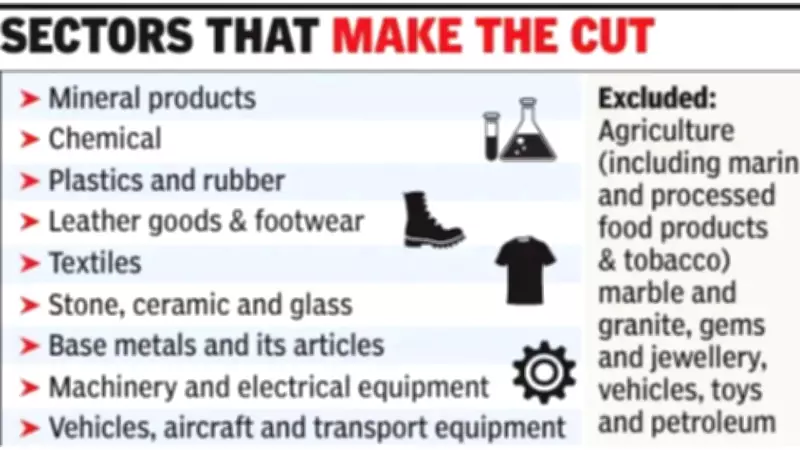
To qualify for this relief, SEZ units must achieve a minimum of 20% value addition within the zone. This requirement is designed to ensure that the benefit supports genuine manufacturing activities rather than creating a trading route. The government has also notified a list of sectors eligible for this concession, covering major industries while excluding sensitive sectors to maintain economic stability.
Expected Benefits and Official Statements
The commerce department estimates that this measure will benefit approximately 1,200 SEZ manufacturing units. By enabling economies of scale, reducing operational costs, and enhancing resilience, the relief aims to help exporters impacted by global challenges, including conflicts in West Asia. An official emphasized that the 30% cap is critical, as it preserves the export-oriented nature of SEZs while offering a meaningful buffer against demand shocks.

Broader Framework and Additional Support Measures
Beyond this relief, the commerce department is developing a broader framework to harmonize various export promotion schemes, with a focus on boosting exports from India. This initiative aligns with the intent announced in the budget and is part of a series of measures to aid exporters. For instance, the government has already provided a Rs 500 crore benefit to enhance insurance support for cargo bound to West Asia, increased focus on duty refunds, and the Reserve Bank of India (RBI) offered relief to exporters earlier this week.
Reinforcing Manufacturing Focus and Sectoral Safeguards
Officials clarified that the inclusion of minimum value addition requirements reinforces that this relief is not about opening a trading route but about strengthening authentic manufacturing activities. It ensures that units continue to focus on substantive production and value creation within India, an official noted, pointing to sectoral safeguards that prevent across-the-board application of the benefit. This calibrated approach aims to balance flexibility with the core objective of maintaining SEZs as primarily export-focused entities.






