

Government Mobilizes Policy Support for Exporters Amid West Asia Conflict Disruptions
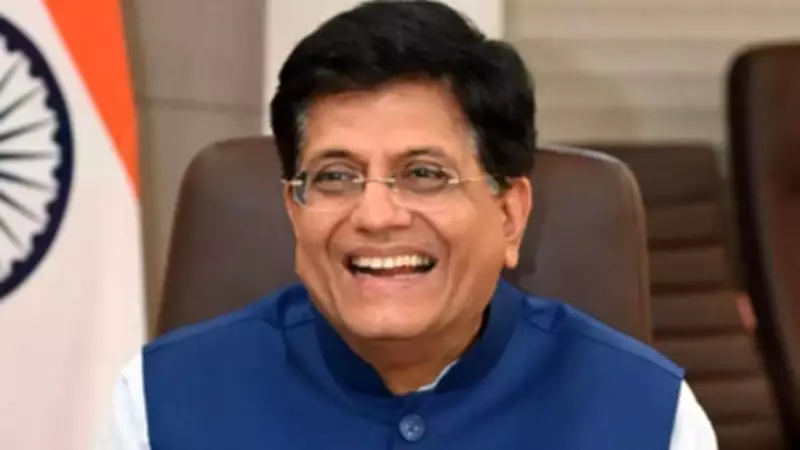
Commerce and Industry Minister Piyush Goyal declared on Friday that the Indian government will utilize all available policy instruments and support mechanisms to assist exporters in navigating disruptions caused by the ongoing conflict in West Asia. Speaking at the sidelines of the IIFT vice chancellors’ conclave in New Delhi, Goyal emphasized the government's commitment to addressing the escalating challenges faced by the export sector.
Inter-Ministerial Group Established for Daily Monitoring
Goyal revealed that an inter-ministerial group has been formed to monitor the situation on a daily basis and promptly address concerns raised by exporters. "And the government will use every policy tool and the export promotion mission to support our exporters...We will be formalizing some ways to give comfort to our exporters," he stated, as reported by PTI. This initiative responds to urgent demands from exporters for government intervention, as the conflict involving the US, Israel, and Iran has severely disrupted shipping routes and driven up freight costs.
Impact on Shipping and Trade Costs
Exporters have reported significant obstacles in moving consignments to West Asia, with shipping lines imposing war-risk surcharges of up to $4,000 per 40-foot container. Additionally, numerous vessels remain stranded in international waters, leading to a sharp increase in freight rates and insurance premiums. West Asia is a vital trade partner for India, with imports totaling $98.7 billion in 2025, primarily in energy, fertilizers, and industrial raw materials, while exports reached $58.8 billion in 2024–25.

Government Coordination and Assurance
Goyal assured that the commerce ministry is working closely with the ministry of shipping and shipping companies to mitigate these challenges. "And I do hope we will find a resolution to this issue also," he added. On the issue of rising freight costs, the minister highlighted ongoing efforts with stakeholders to explore ways to reduce the burden on exporters. "Every day the inter-ministerial group talks to the exporters...They take feedback, and we will not be found wanting in supporting our exporters in any way," he affirmed.
He further guaranteed that India will honor all international commitments made by domestic industries to overseas buyers, citing the country's reputation as a trusted partner during the Covid-19 pandemic. "But I can assure you, this government stands with our industry and will continue to ensure that all our international commitments are met. Because that is what defines India," Goyal remarked.
Exporters' Demands and Industry Challenges
Exporters have put forth several requests to alleviate the crisis, including:
- Higher RoDTEP (Remission of Duties and Taxes on Exported Products) rates.
- Urging the Export Credit Guarantee Corporation of India (ECGC) to avoid increasing insurance premiums.
- Seeking ad hoc working-capital limits and credit extensions, similar to measures during the pandemic.
Industry groups report that exporters are grappling with a shortage of containers, suspension or cancellation of vessel calls to the Middle East, and sharply rising logistics costs. They have called for urgent government support to mitigate the impact of shipping disruptions triggered by the Iran crisis and instability across key maritime routes.
Financial and Operational Pressures
International freight rates have surged by an estimated 15–20 per cent, while war-risk surcharges and insurance premiums for Gulf-bound shipments have escalated. Marine fuel oil prices have also climbed to around $580 per tonne from about $520, according to the Indian Register of Exporters Federation (IREF).
Additional demands from exporters include:

- Waiving port-related charges such as storage and demurrage when cargo is rolled over due to vessel cancellations or sharp freight increases beyond their control.
- Facilitating the return, redirection, or diversion of cargo in transit, with assistance from customs authorities and the Reserve Bank of India for documentation and payment adjustments.
- Issuing an official advisory recognizing the disruption as a force majeure-type event, particularly for rice exporters, to prevent contractual penalties.
The government's proactive stance aims to stabilize India's export sector and maintain its global trade relationships amidst the ongoing geopolitical tensions in West Asia.





