

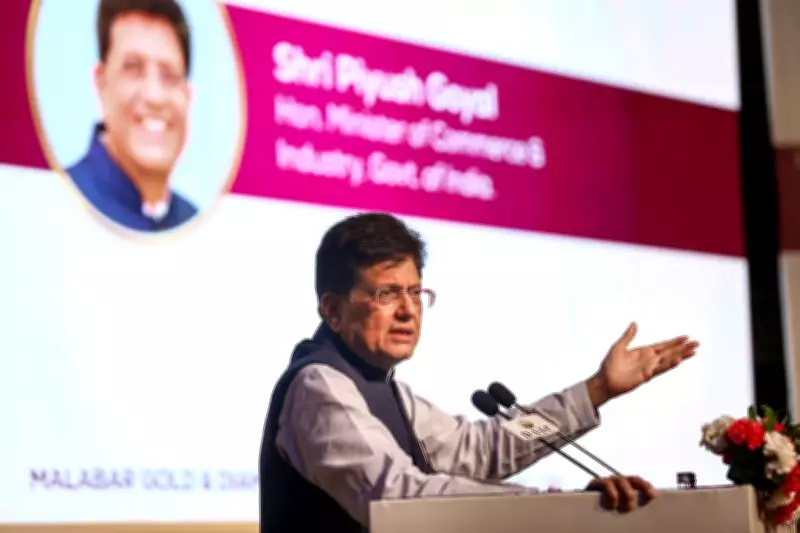
Piyush Goyal Stresses Transparency in WTO Reforms at 14th Ministerial Conference
Union Commerce and Industry Minister Piyush Goyal has called for a transparent, inclusive, and member-driven process in reforming the World Trade Organisation (WTO). Speaking at the 14th Ministerial Conference (MC14) in Yaoundé, Cameroon, Goyal outlined that these reforms should uphold the foundational principles of the WTO while keeping development at its core.
Key Principles for WTO Reforms
Goyal highlighted that the reforms must focus on several critical areas:
- Non-discrimination: Ensuring fair treatment for all member nations.
- Consensus-based decision making: Promoting collaborative and equitable processes.
- Equity: Addressing the needs of developing and vulnerable economies.
He emphasized that Special and Differential Treatment (S&DT) provisions should be precise, effective, and operational to support global south countries.

Addressing Plurilateral Agreements and Dispute Settlement
The minister stated that any incorporation of plurilateral outcomes into the WTO framework should be based on consensus. This approach must not impair the existing rights of non-parties or impose additional obligations on them. Goyal also pointed out the urgency of delivering on past mandates, particularly highlighting the dysfunctional Dispute Settlement System.
"We must restore the automatic and binding dispute settlement system," Goyal asserted, noting that its current state deprives members of effective redressal mechanisms.
Priority Issues: Agriculture and Fisheries
Goyal underscored that agriculture is vital for the livelihoods of millions, especially in the global south. He called for priority action on long-pending mandated issues, including:
- A permanent solution on public stockholding for food security purposes.
- A special safeguard mechanism.
- Addressing cotton-related concerns.
Regarding fisheries, India remains committed to negotiating a comprehensive Fisheries Subsidies Agreement. This agreement should balance current and future fishing needs while protecting the livelihoods of poor fishers, with appropriate S&DT provisions.
Moratorium on Electronic Transmissions and Emerging Technologies
The minister raised concerns about the moratorium on customs duties for electronic transmissions. Given the lack of a common understanding among members and its potentially significant implications, Goyal suggested that the continued extension of this moratorium warrants careful reconsideration.
He also emphasized that emerging technologies must serve Sarvajan Hitaya, Sarvajan Sukhaya—welfare and happiness for all. The multilateral trading system should ensure that innovation, development, and opportunities are shared equitably among members.
Commitment to Multilateralism and Future Engagement
Goyal concluded by affirming India's constructive engagement to demonstrate that the WTO remains central to global trade. He stressed the need to reform the organisation to make it responsive, performance-oriented in delivering development, equity, and inclusiveness, and transformative to better serve the interests of the poor, vulnerable, and marginalised people, anchored in consensus and multilateralism.






