

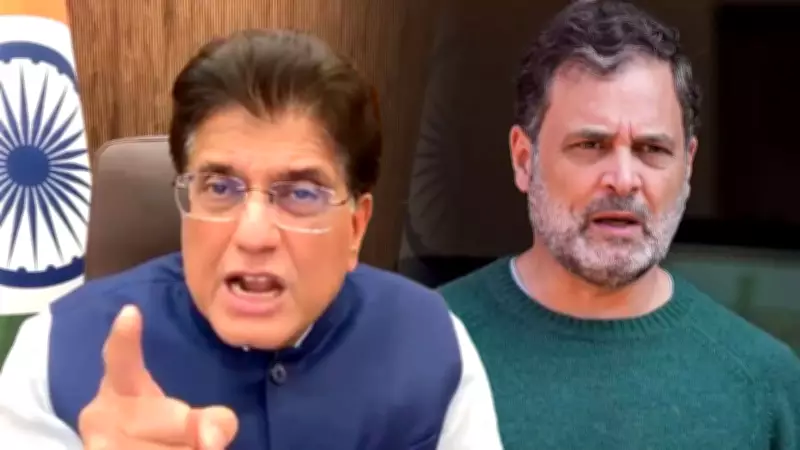
Piyush Goyal Slams Rahul Gandhi as 'Habitual Liar' Over India-US Trade Deal
The India-US trade framework has ignited a fierce political confrontation between the ruling BJP and the opposition Congress, with Commerce Minister Piyush Goyal delivering a blistering attack on Rahul Gandhi. The controversy erupted after Gandhi warned that the trade agreement could severely harm farmers and compromise India's food security.
Goyal's Strong Rebuttal to Gandhi's Claims
In a sharp response, Goyal dismissed Gandhi's remarks as completely baseless and politically motivated. The minister accused the Congress leader of being a "habitual liar" who is deliberately attempting to mislead the agricultural community. Goyal emphasized that the government has taken comprehensive measures to protect farmers' interests within the trade framework.
"The opposition is engaging in pure fear mongering," Goyal stated. "They are trying to provoke farmers with misleading narratives that have no basis in reality. Our agreement with the United States has been carefully negotiated to ensure that Indian agriculture remains secure and prosperous."

Assurances to the Farming Community
The commerce minister provided specific assurances to address concerns raised by farmers and opposition parties:
- Full protection for major crops and sensitive agricultural sectors
- No opening of doors for dairy or poultry imports that could threaten domestic producers
- Expanded export opportunities for cotton growers, fruit producers, and spice exporters
- Strengthened incomes for farmers through enhanced market access
According to Goyal, the trade agreement represents a strategic opportunity to boost agricultural exports while maintaining robust safeguards for domestic producers. He highlighted that the framework has been designed to create new revenue streams for farmers rather than exposing them to unfair competition.
Broader Political Implications
This heated exchange underscores the broader political battle unfolding over economic policy, farmer welfare, and the Modi government's trade strategy. The confrontation has become a focal point in the ongoing debate about how India should position itself in global trade relations while protecting vulnerable sectors.
The government maintains that the India-US trade framework will strengthen economic ties between the two nations while safeguarding national interests. Meanwhile, the opposition continues to raise concerns about potential negative impacts on agricultural communities and food sovereignty.
As the political rhetoric intensifies, farmers remain at the center of this debate, with both sides claiming to champion their cause. The outcome of this confrontation could significantly influence public perception ahead of future electoral contests and shape India's approach to international trade negotiations.






