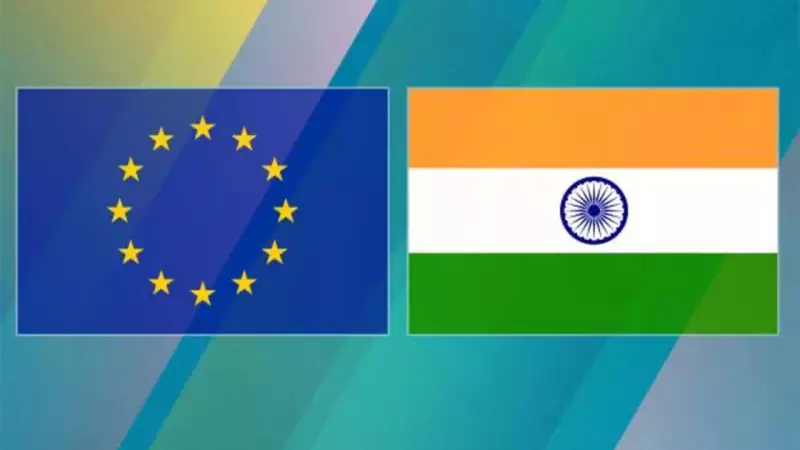
India is poised to implement a substantial reduction in import tariffs on automobiles from the European Union, with duties set to be lowered to 40 per cent from current levels that can reach as high as 110 per cent. This move represents the country's most significant opening of its closely guarded automobile market to date.
Major Shift for a Protected Auto Market
The decision comes as New Delhi and Brussels approach the finalization of a long-awaited free trade agreement, which could be announced as early as Tuesday. According to sources familiar with the negotiations, the Modi government has agreed to immediately reduce import taxes on a limited number of vehicles from the 27-nation EU bloc, specifically those with an import price exceeding 15,000 euros.
Over time, these duties could potentially be reduced further to 10 per cent, significantly improving market access for European automotive manufacturers including Volkswagen, Mercedes-Benz, and BMW. India currently imposes import duties ranging from 70 per cent to 110 per cent on foreign vehicles, a policy that has drawn criticism from global automotive executives, including Tesla CEO Elon Musk.

Immediate Impact and Long-term Implications
Under the proposed agreement, New Delhi has offered to immediately slash duties to 40 per cent for approximately 200,000 combustion-engine cars annually, marking its most aggressive initiative yet to liberalize the automotive sector. However, battery electric vehicles will be excluded from these duty reductions for the initial five-year period to safeguard domestic manufacturers such as Tata Motors and Mahindra & Mahindra, after which similar reductions may apply.
Lower tariffs would particularly benefit European automakers, whose current share of India's 4.4-million-unit annual car market remains below 4 per cent. With projections indicating the Indian market could expand to six million units by 2030, these proposed tariff cuts would enable manufacturers to assess demand with imported models before making substantial investments in local manufacturing facilities.
Trade Enhancement Amid Global Tariff Pressures
The broader free trade agreement is anticipated to significantly boost bilateral trade and assist Indian exporters in mitigating the impact of steep US tariffs. The European Union already stands as India's largest trading partner in goods, with bilateral trade valued at $136.53 billion during the 2024–25 period, while services trade exceeded $83 billion.
This agreement is also viewed as a strategic measure to diversify supply chains and reduce dependence on China amidst evolving global trade dynamics. The comprehensive FTA is expected to create new opportunities across multiple sectors while strengthening economic ties between India and the European Union.
Historic Agreement Nearing Conclusion
India and the European Union are expected to announce the conclusion of negotiations for this landmark free trade agreement this week, a pact that Commerce and Industry Minister Piyush Goyal has described as the "mother of all deals." The negotiations, which commenced in 2007, are now approaching completion after nearly 18 years of discussions.
The formal announcement is anticipated during the India-EU Summit scheduled for January 27, where Prime Minister Narendra Modi is set to hold discussions with European Commission President Ursula von der Leyen and European Council President Antonio Costa. This agreement represents a significant milestone in India's trade policy and its economic relationship with one of the world's largest trading blocs.