India Denies Reports of Delayed Trade Deal with United States
NEW DELHI: The Indian government has firmly denied media reports suggesting it is holding off bilateral engagement or delaying a trade agreement with the United States. In an official statement released on Friday, the commerce ministry clarified that discussions between the two nations are actively continuing with the goal of reaching a mutually beneficial agreement.
Official Statement Rejects Reuters Report
The commerce ministry issued a statement specifically addressing a Reuters report that claimed India might delay signing a trade deal with the US for several months. "We have noted a media report regarding ongoing trade talks with the US. It is denied that there is any hold off in bilateral engagement. It is reiterated that the two sides remain engaged for a mutually beneficial trade agreement," the ministry declared.
According to the Reuters report, four government officials familiar with the matter indicated that the timeline for finalizing the agreement could slip by several months as India adopts a "wait and watch" approach on tariff policy. However, the commerce ministry has categorically rejected this claim, emphasizing that engagement remains ongoing and productive.

Background of Trade Negotiations and Investigations
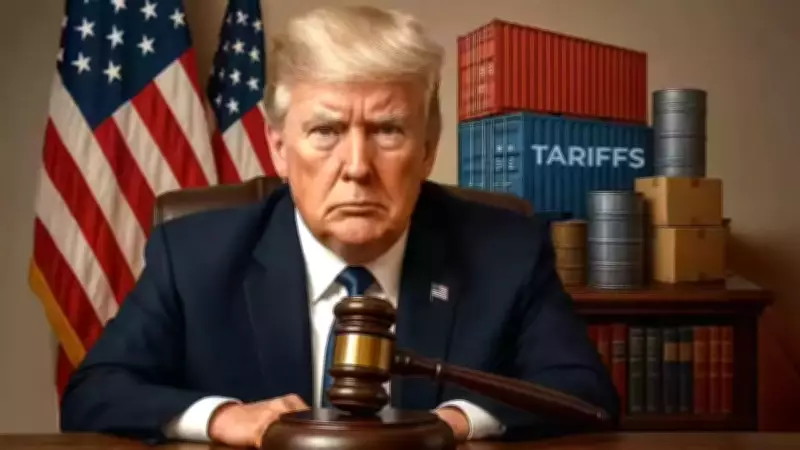
This development occurs against the backdrop of fresh trade investigations launched by the administration of former President Donald Trump. These investigations target "unfair trade practices" by approximately 60 economies, including India, with a focus on concerns such as forced labor in imports. Additionally, the United States has initiated separate probes into excess industrial capacity among 16 major trading partners.
Officials have noted that the Section 301 investigation could potentially lead to new tariffs on several economies, including India, China, the European Union, Japan, South Korea, and Mexico, possibly as early as this summer. This adds a layer of complexity to the ongoing trade discussions between India and the US.
Momentum in Negotiations and Recent Challenges
The Reuters report suggested that negotiations lost momentum after the US Supreme Court struck down Trump's tariffs in late February. Since then, there have been no substantive talks between the two sides, partly because Washington has been focused on escalating conflicts involving Iran.
India had initially hoped to sign an interim trade deal in March, followed by a comprehensive agreement later in the year. This earlier understanding came after Trump agreed in early February to ease steep US tariffs on Indian imports in exchange for several commitments from New Delhi. These commitments included reducing purchases of Russian oil, lowering duties on American goods, and pledging to buy $500 billion worth of US products.
However, India did not halt Russian oil imports, though purchases slowed somewhat. US officials are now urging New Delhi to increase imports to help ease the global energy crunch triggered by ongoing conflicts. A source told Reuters, "We are not in a hurry to sign any deal. The new investigation is a pressure tactic to force countries into signing deals after the court order. It's a spanner in the works." The report noted that India would largely adopt a "wait and watch" approach as US tariff policy evolves.
Historical Context and Tariff Issues
Earlier, Trump had announced a 25% punitive tariff on India but later dropped it after stating that New Delhi had agreed to curb Russian crude imports. India, however, only said it would diversify its supply sources. At one point, the overall tariff on Indian goods had reached about 50%, among the highest globally, highlighting the contentious nature of past trade relations.
US Expectations and Commitments
Meanwhile, US Ambassador to India Sergio Gor emphasized that Washington expects countries that have negotiated trade deals with the United States to follow through on their commitments. Speaking at the India Today Conclave on Friday, he said, "So we fully expect the nations that we've made deals with to honour those deals. I think India will do that because ... it's not just about honouring it - it's a win-win situation."

Following the Supreme Court ruling, the Trump administration imposed a temporary 10% tariff on imports from all countries until July 24. Under the earlier framework for an interim agreement, Indian exports to the United States were expected to face duties of around 18%. However, New Delhi is now left seeking clarity on whether Washington will return to that rate or apply a different tariff level, adding uncertainty to the negotiations.
In summary, while media reports have speculated about delays, the Indian government maintains that trade talks with the US are progressing steadily, with both sides working towards a mutually advantageous agreement amidst evolving global trade dynamics and investigations.