India-EU FTA: A Historic Milestone in Bilateral Relations
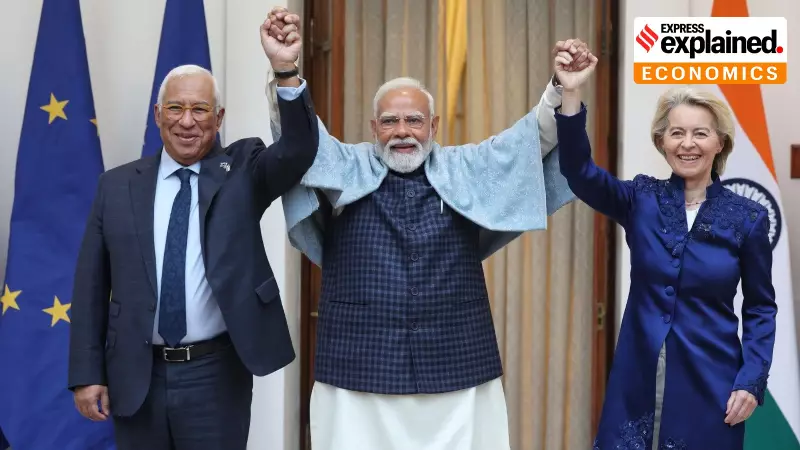
Prime Minister Narendra Modi, alongside European Council President António Luís Santos da Costa and European Commission President Ursula von der Leyen, celebrated the successful conclusion of negotiations for the landmark India–EU Free Trade Agreement (FTA) on Tuesday, January 27, 2026. This pivotal agreement, hailed as a cornerstone of the India–EU Strategic Partnership, promises to significantly boost bilateral trade and investment, foster shared prosperity, and reinforce resilient supply chains.
10 Crucial Aspects of the India-EU Free Trade Agreement
The FTA encompasses ten key components that signal a transformative shift in India-EU relations, from fostering a trusted partnership to addressing global trade challenges. Here are the essential takeaways:
- Trusted Partnership: The deal reflects a deep bond built on shared democratic values, human rights, and rule of law, strengthened by a vibrant diaspora of 1.7 million and over 121,000 students.
- Complementarity and Scale: As the world's fourth and second largest economies, India and the EU account for 25% of global GDP and over one-third of global trade. Their integration unlocks unprecedented trade and investment opportunities.
- Trade Diversification and Supply Chain Resilience: This FTA complements existing agreements with the UK and EFTA, advancing India's strategy to diversify trade and build resilient supply chains amid challenges from China and the US.
- Win-Win Commercial Benefits: The agreement is commercially meaningful for both sides. India gains access to the EU's second-largest export market, with net gains expected in labour-intensive sectors like textiles, gems, and leather. The EU benefits from India's fast-growing market with higher tariffs.
- Safeguarding Sensitive Sectors: Core agriculture areas, including dairy, cereals, and certain fruits, are excluded to respect sensitivities, ensuring protection for farmers, a key electoral constituency.
- Auto Industry Liberalisation: A carefully crafted package allows EU automakers to introduce high-end models in India, fostering competition and supporting Make in India initiatives for future exports.
- Addressing Carbon Border Adjustment Mechanism (CBAM): The FTA paves the way for constructive engagement on CBAM, offering India favourable treatment and EU support to tackle climate change challenges.
- Services Sector Expansion: Services are poised to dominate both economies, with the agreement ensuring market access, non-discriminatory treatment, and a focus on digitally delivered services to boost India's exports.
- Living Agreement Framework: Designed as a dynamic document, the FTA includes review and consultation mechanisms to adapt to new challenges, technologies, and regulatory complexities, relying on trust for mutual gains.
- Global Signal and US Implications: The deal sends a strong message to global businesses about India's commitment to open, fair, and rule-based trade, countering trends of tariff wars and weaponised trade.
Implications for Bilateral Ties and Global Trade
The India-EU FTA not only strengthens economic cooperation but also signals a strategic alignment in promoting sustainable growth and inclusive development. By enhancing trade diversification and supply chain resilience, it positions both partners to navigate global uncertainties effectively. The emphasis on services and digital innovation underscores future-oriented collaboration, while safeguards for sensitive sectors ensure balanced benefits.

This agreement is a testament to the evolving partnership between India and the EU, setting a precedent for international trade agreements in an era of geopolitical shifts. It reinforces India's role as a key player in the global economy, committed to fostering stability and prosperity through cooperative frameworks.