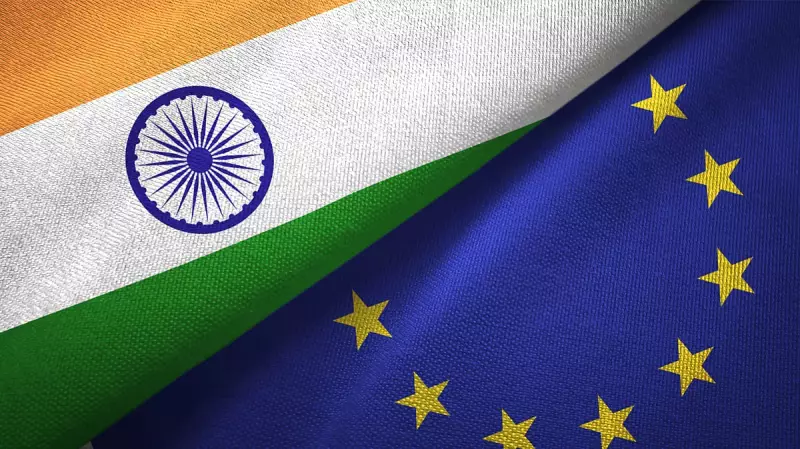
India-EU Free Trade Agreement: A Strategic Anchor in a Fracturing Global Order
The India-EU Free Trade Agreement (FTA) is emerging as a pivotal framework that seamlessly integrates climate action with trade, positioning itself as a strategic anchor in an increasingly fracturing global economic landscape. This landmark agreement aims to foster sustainable growth by aligning economic interests with environmental responsibilities, setting a new benchmark for international partnerships.
Bridging Climate and Trade in a Divided World
In a world where geopolitical tensions and economic fragmentation are on the rise, the India-EU FTA stands out by embedding climate considerations directly into its trade mechanisms. This innovative approach not only enhances bilateral trade but also promotes green technologies and sustainable practices, ensuring that economic progress does not come at the expense of the planet.
The agreement is designed to address the challenges posed by a fracturing global order, where traditional alliances are being tested and new economic blocs are forming. By prioritizing climate action, the India-EU FTA aims to create a resilient and forward-looking partnership that can navigate the complexities of today's international dynamics.

Key Features of the India-EU FTA
- Integration of Climate Goals: The FTA incorporates specific provisions to reduce carbon emissions and promote renewable energy, making it a model for eco-friendly trade agreements.
- Enhanced Market Access: Both India and the EU will benefit from reduced tariffs and streamlined regulations, boosting trade in goods and services while adhering to high environmental standards.
- Focus on Sustainable Development: The agreement emphasizes sustainable development goals, encouraging investments in green infrastructure and clean technologies.
- Resilience to Global Shocks: By diversifying supply chains and fostering cooperation, the FTA aims to build economic resilience against global disruptions and geopolitical uncertainties.
Implications for the Global Economy
The India-EU FTA is expected to have far-reaching implications for the global economy. As one of the first major trade deals to explicitly anchor climate action within its framework, it could inspire similar agreements worldwide, shifting the focus from purely economic gains to holistic sustainable growth.
This partnership also highlights the growing importance of strategic alliances in a fracturing global order, where countries are seeking reliable partners to navigate economic and environmental challenges. The India-EU FTA serves as a testament to the power of collaboration in addressing pressing global issues.
In conclusion, the India-EU Free Trade Agreement represents a significant step forward in aligning trade with climate objectives. By anchoring itself in the principles of sustainability and resilience, it offers a blueprint for future international agreements in an era of global fragmentation.