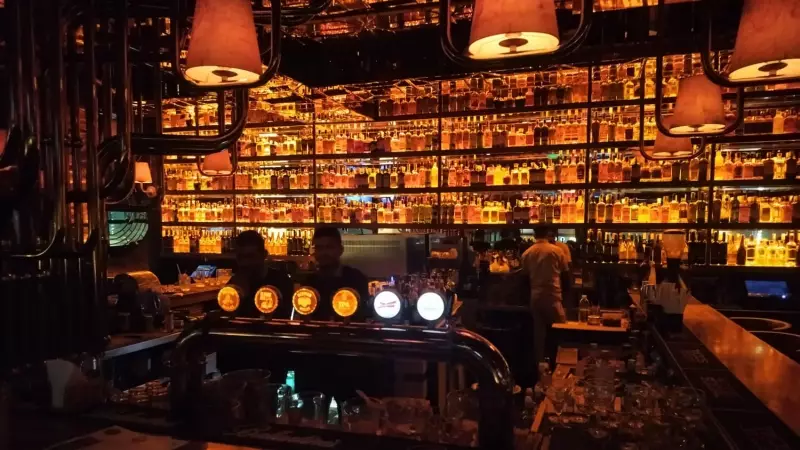
The proposed tariff reductions on imported European alcoholic beverages under the India-European Union Free Trade Agreement have been largely welcomed by liquor merchants and industry experts, who anticipate a boost in competition and the premiumisation of India's traditionally protected market. The agreement, likely to be implemented within the 2026 calendar year as stated by Commerce Minister Piyush Goyal, will see significant duty cuts on wines, spirits, and beer from the EU.
Details of the Duty Reductions
As per the FTA, the duty on European wine will be reduced from 150% to 20% for the premium range and 30% for the medium range. For wines priced below 2.5 euros, there will be no duty concessions. For spirits, the duty will be reduced from up to 150% at present to 40%, and for beer from 110% to 50%. These changes are expected to make imported European beverages more accessible to Indian consumers.
Industry Reactions and Consumer Benefits
Rahul Singh, Founder & CEO of The Beer Cafe, highlighted the shift in consumer preferences, stating, "Indian consumers today value variety, authenticity and global provenance far more than ever before. The FTA supports this shift by enabling wider access to international beers, wines and spirits, which in turn, strengthens the overall drinking experience." He added that any custom duty reduction directly benefits consumer pricing and provides access to specialties previously hesitant to enter India.

However, no details are yet available on the exact timelines and actual price reductions. Rakshay Dhariwal, Managing Director of Passcode Hospitality, noted that price reductions will only materialize once the agreement is implemented and existing stock finishes. He estimated a 20-25% reduction in overall bottle prices, but cautioned that this depends on how companies adjust their costs and whether importers pass on the benefits.
Impact on Domestic Market and Regional Variations
Dhariwal emphasized that the move will take time to trickle down to purchasers and affect menus, with no uniform pricing across India. He explained, "The price drop in states like Maharashtra, where retail costs are high, will be more versus say Goa or Haryana." On the domestic front, local wines are expected to face the biggest impact as they compete with European brands, while imported competitors may challenge domestic producers like those of Agave-based spirits.
Hansel Vaz, founder of Cazulo Premium Feni, welcomed the move for premiumisation but expressed disappointment over the lack of reciprocal zero tariffs for GI products, which could have helped take Feni to the European market. He opined that significant overall price reductions may not occur, citing the example of wines after the Australian FTA.
Enhancing Creativity and Access
Minakshi Singh, co-founder of bars in Gurgaon and Delhi, welcomed the move, stating, "Some of the prices were prohibitive earlier. The move is great for the premiumisation of spirits, and improves both prices and access. It will open up our market for further creativity, especially in the cocktail space." She added that while prices will see a downward trend, the exact percentage will only be clear once more details are available.
Overall, the India-EU FTA is poised to transform India's alcoholic beverage market by reducing duties on European imports, fostering competition, and enhancing consumer access to premium products, though challenges in implementation and regional pricing disparities remain.