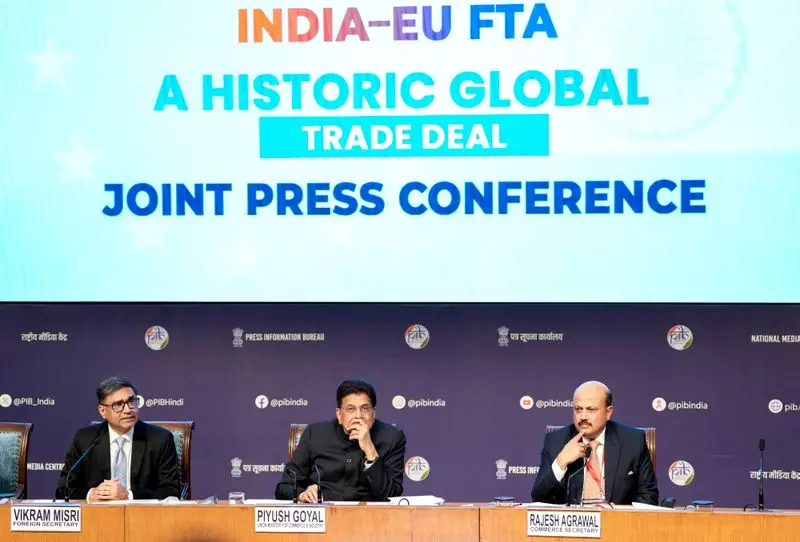
Commerce and Industry Minister Piyush Goyal has expressed optimism that the long-awaited Free Trade Agreement (FTA) between India and the European Union (EU) is poised to come into effect within the current year. This development signals a major breakthrough in strengthening economic ties and fostering enhanced trade cooperation between the two significant global partners.
Key Milestone in India-EU Trade Relations
During a recent address, Minister Goyal highlighted the substantial progress made in the negotiations, underscoring the mutual benefits anticipated from this comprehensive trade pact. The FTA is designed to eliminate or reduce tariffs on a wide array of goods and services, thereby facilitating smoother market access and boosting bilateral trade volumes. This agreement is expected to cover critical sectors such as pharmaceuticals, automobiles, textiles, and information technology, which are pivotal to India's export-oriented economy.
Economic Implications and Strategic Advantages
The implementation of the India-EU FTA is projected to yield significant economic advantages for both regions. For India, it promises to open up new avenues for exports, attract foreign direct investment, and create numerous job opportunities. Conversely, European businesses stand to gain from improved access to India's vast and rapidly growing consumer market, which is increasingly receptive to high-quality products and innovative services.

Enhanced Market Access and Tariff Reductions
One of the core components of the FTA involves the progressive reduction of customs duties on various products. This move is anticipated to make Indian goods more competitive in the European market while allowing EU exporters to penetrate the Indian market more effectively. Additionally, the agreement is likely to include provisions for intellectual property rights, sustainable development, and digital trade, aligning with contemporary global trade standards.
Overcoming Challenges and Future Prospects
Despite the positive outlook, both parties have navigated complex issues during the negotiations, including agricultural subsidies, data localization, and regulatory harmonization. Minister Goyal emphasized the collaborative efforts undertaken to address these challenges, reflecting a shared commitment to achieving a balanced and equitable agreement. The successful conclusion of this FTA could serve as a model for future trade deals, reinforcing India's position as a key player in the global economic landscape.
Looking ahead, the operationalization of the India-EU FTA this year is expected to catalyze deeper economic integration and foster a more robust partnership. It underscores the strategic importance of trade diplomacy in driving growth and prosperity for both India and the European Union.